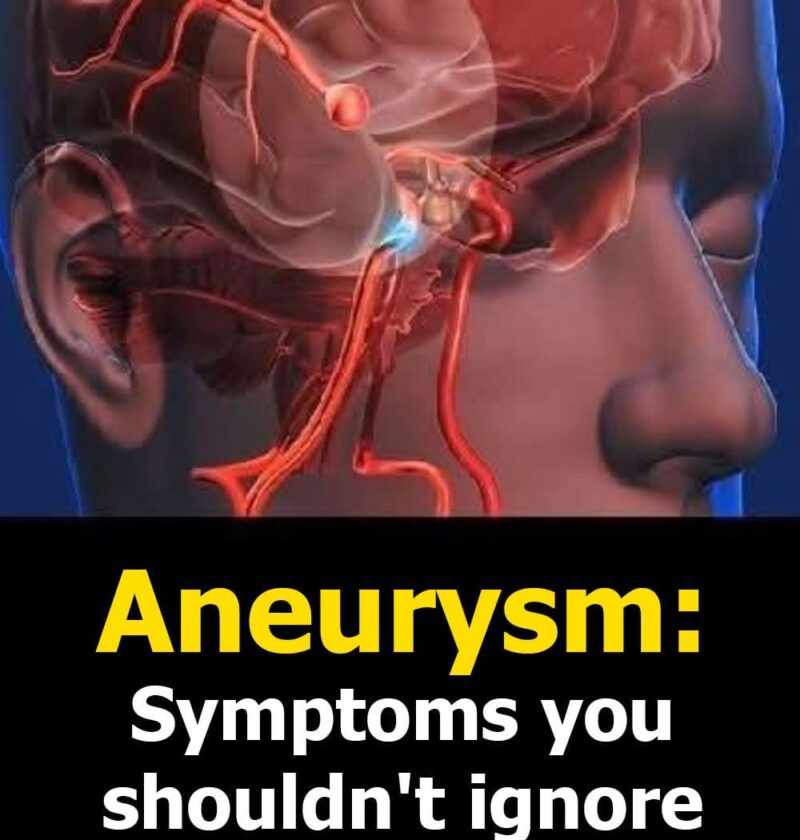
An Aneurysm is a bulge or weakening in a blood vessel wall. The danger is that it can rupture and cause life-threatening internal bleeding or stroke. The tricky part is that many aneurysms have no symptoms until they become serious, but there are warning signs you should never ignore.
Here are the key ones:
🧠 1) Sudden, severe headache (“worst headache of your life”)
This is a classic warning sign of a possible brain aneurysm rupture.
It may feel like:
- a sudden explosive headache
- pain unlike any previous headache
- rapid onset within seconds
This can be associated with a Subarachnoid hemorrhage, which is a medical emergency.
👁️ 2) Vision changes
You may notice:
- blurred or double vision
- drooping eyelid
- pain behind one eye
This can happen if an aneurysm presses on nearby nerves.
⚖️ 3) Loss of balance or coordination
- dizziness
- trouble walking
- sudden weakness or confusion
These can indicate reduced blood flow or bleeding in the brain.
🗣️ 4) Speech or cognitive changes
- slurred speech
- confusion
- difficulty understanding others
These signs may overlap with stroke symptoms.
💥 5) Sudden neck stiffness or pain
Especially with:
- headache
- nausea or vomiting
- sensitivity to light
This can be a warning of bleeding around the brain.
🩸 6) Sudden, severe pain in other areas (depending on location)
Not all aneurysms are in the brain. For example:
Abdominal aneurysm:
- deep abdominal or back pain
- pulsating feeling in the stomach
Chest aneurysm:
- chest or upper back pain
- shortness of breath
🚨 When to seek emergency help
Call emergency services immediately if you experience:
- sudden “worst headache”
- collapse or loss of consciousness
- stroke-like symptoms
- severe unexplained pain in head, chest, or abdomen
🧠 Key point
Most aneurysms are silent until they become dangerous. That’s why sudden, unusual symptoms should always be treated seriously, even if they come and go.
⚖️ Bottom line
An aneurysm may not give warning signs early, but when it does, the symptoms are usually sudden, severe, and unlike anything you’ve felt before.
If you want, I can also explain:
- what causes aneurysms
- who is at highest risk
- or how doctors detect them before they rupture (scans and screening methods)