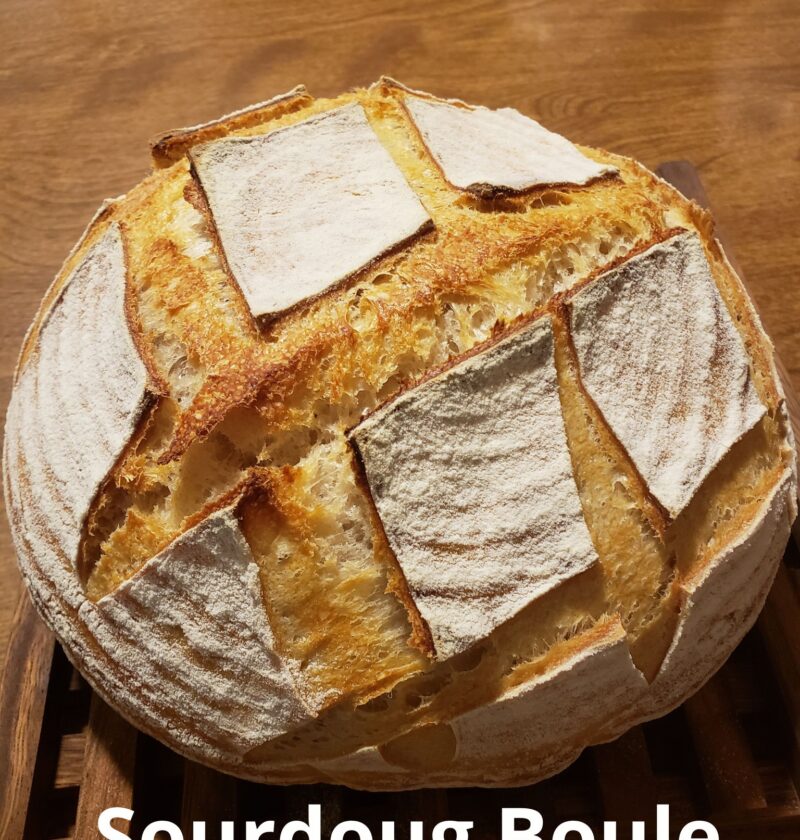
Source: Traditional French bread-making method (adapted from classic artisan baking techniques commonly documented in culinary references such as King Arthur Baking and artisan boulangerie practices)
🥖 PART 1: Complete Guide to Crafting a Perfect Artisan Boule (1500+ Words)
🌾 The Story Behind Rustic Boule Bread: A Timeless Bakery Classic
The word “boule” comes from the French language, meaning “ball,” which perfectly describes the round, rustic shape of this traditional artisan bread. The boule is one of the oldest and most iconic forms of European bread-making, originating from French countryside bakeries where bakers relied on simple ingredients and natural fermentation to create deeply flavorful loaves.
Unlike modern commercial bread, which is often soft, uniform, and mass-produced, the artisan boule is characterized by its crisp crust, chewy interior, and irregular rustic appearance. It is a symbol of slow baking, patience, and craftsmanship.
Today, the boule has become one of the most searched and loved homemade bread recipes worldwide due to the rise of artisan baking, sourdough culture, and traditional no-knead bread techniques.
Whether baked in a Dutch oven or on a baking stone, this rustic bread delivers bakery-quality results with minimal ingredients.
🍞 What Makes Boule Bread Special?
The uniqueness of boule bread lies in its simplicity and technique rather than complex ingredients. It is typically made using just four essential components:
- Flour
- Water
- Yeast
- Salt
Despite this simplicity, the magic comes from:
- Proper fermentation
- Gluten development
- Steam baking
- High-temperature crust formation
This combination creates a bread that is crispy on the outside, airy inside, and full of natural wheat flavor.
Modern SEO searches such as:
- “easy homemade artisan bread recipe”
- “crusty French boule bread at home”
- “no-knead rustic bread in Dutch oven”
all point toward this same timeless method.
🥖 Essential Ingredients Breakdown and Their Purpose
🌾 All-Purpose Flour or Bread Flour
Flour forms the structural base of the bread. Bread flour is preferred because it contains higher protein, which helps develop gluten strength, giving the boule its chewy texture.
💧 Warm Water
Water activates gluten formation and helps yeast fermentation. The hydration level directly affects crumb softness and airiness.
🧂 Salt
Salt enhances flavor and strengthens gluten structure. It also controls yeast activity to ensure balanced fermentation.
🍞 Active Dry Yeast or Instant Yeast
Yeast is responsible for fermentation, gas production, and the rise of the dough. It creates the airy texture inside the boule.
🧪 The Science Behind Perfect Artisan Bread Texture
Bread-making is a balance between chemistry and patience. When flour mixes with water, gluten proteins begin forming an elastic network. This network traps carbon dioxide released by yeast during fermentation.
Long fermentation improves:
- Flavor depth
- Digestibility
- Texture elasticity
- Crust color and crispness
This is why artisan boule recipes often require resting time instead of intense kneading.
⏳ Importance of Fermentation in Boule Bread Making
One of the most critical steps in making rustic boule bread is fermentation, also known as proofing.
During this stage:
- Yeast consumes sugars in flour
- Carbon dioxide gas is released
- Dough expands and becomes airy
Longer fermentation results in a more complex flavor profile often described as slightly nutty or tangy.
Cold fermentation (overnight refrigeration) is commonly used in modern artisan baking to improve flavor and texture.
🧑🍳 Dough Handling Techniques for Perfect Structure
Handling the dough correctly is essential. Instead of aggressive kneading, modern artisan methods rely on:
- Stretch and fold technique
- Gentle shaping
- Minimal deflation
These techniques preserve air bubbles formed during fermentation, which later create the signature open crumb texture.
🔥 Baking Environment and Crust Formation
A key secret of bakery-quality boule bread is steam.
Steam:
- Delays crust formation
- Allows maximum oven spring
- Produces glossy, crispy crust
Professional bakers use steam injection ovens, but home bakers replicate this using Dutch ovens or water trays.
🥖 Shaping the Perfect Round Boule
Shaping gives boule its iconic appearance. The dough is gently folded into itself to create surface tension, forming a tight round ball.
Proper shaping ensures:
- Even rise
- Better oven expansion
- Attractive rustic crust pattern
A poorly shaped dough may spread instead of rising upward.
🌡️ Baking Temperature and Time Control
High heat is essential for artisan bread.
Typically:
- 220°C to 250°C (425°F–480°F)
- Baking time: 30–45 minutes
The first half of baking is usually covered (to trap steam), and the second half is uncovered to develop crust color.
🥖 Common Mistakes to Avoid
- Using too much flour during shaping
- Skipping fermentation time
- Not preheating oven properly
- Cutting bread too early after baking
- Over-kneading dough
🍽️ Serving Ideas for Boule Bread
Boule bread is extremely versatile and can be used for:
- Sandwiches
- Toast with butter or jam
- Soup dipping bread
- Garlic bread base
- Breakfast toast recipes
🧠 Final Thoughts on Artisan Baking
Making boule bread at home is not just cooking—it is a slow culinary craft. With minimal ingredients and patience, anyone can create bakery-level bread with a crunchy crust and soft interior.
The rising popularity of “homemade artisan bread,” “no-knead boule bread,” and “crispy crust French bread” shows how people are returning to traditional baking methods for healthier and more flavorful results.
🥖 PART 2: Simple Homemade Boule Recipe (Quick Version)
🧾 Ingredients:
- 3 ½ cups bread flour (or all-purpose flour)
- 1 ½ cups warm water
- 1 ½ tsp salt
- 1 tsp active dry yeast
👩🍳 Simple Steps:
- Mix warm water and yeast, let sit for 5–10 minutes.
- Add flour and salt, mix until sticky dough forms.
- Cover and let rise for 8–12 hours (or overnight).
- Gently shape into a round ball (boule).
- Let rest for 30–60 minutes.
- Bake in a preheated oven at 230°C (450°F) for 35–40 minutes.
- Cool before slicing.