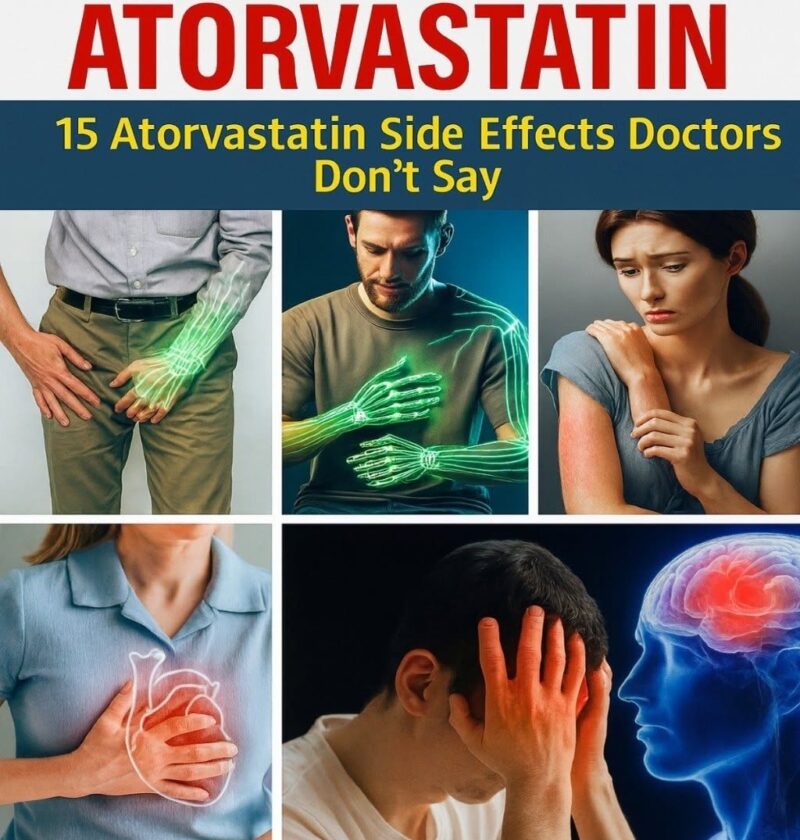
Here are some of the side effects and safety considerations that are worth knowing:
Common side effects
These are usually mild and often improve over time:
- Muscle aches or soreness
- Headache
- Joint pain
- Nausea or indigestion
- Constipation or diarrhea
Less common side effects
Some people may experience:
- Fatigue
- Sleep disturbances
- Mild memory or concentration problems (the evidence is mixed, and these symptoms are often reversible if related to the medication)
- Slight increases in blood sugar, particularly in people already at risk for diabetes
Important but uncommon risks
-
Muscle injury
Muscle pain or weakness is the best-known side effect. In very rare cases, severe muscle breakdown (rhabdomyolysis) can occur.Seek medical attention promptly if you have:
- Severe muscle pain or weakness
- Dark, tea- or cola-colored urine
- Fever along with muscle symptoms
- Liver problems
Serious liver injury is rare, but contact your healthcare provider if you develop:- Yellowing of the skin or eyes
- Dark urine
- Persistent nausea or severe fatigue
- Medication interactions
The risk of side effects increases when atorvastatin is taken with certain antibiotics, antifungal medications, antiviral drugs, or large amounts of grapefruit or grapefruit juice.
Things that are often overstated online
Claims that atorvastatin commonly causes:
- Permanent memory loss
- Kidney failure
- Severe liver damage
- “Hidden poisoning”
are not supported by evidence for most people. These events are rare, and routine medical follow-up helps detect problems early.
Don’t stop it on your own
If you think you’re having side effects, don’t stop atorvastatin without discussing it with the healthcare professional who prescribed it. They may recommend:
- A lower dose
- A different statin
- A different cholesterol-lowering medication
- Testing to determine whether your symptoms are actually related to the drug
Bottom line
Atorvastatin can cause side effects, but most are mild, and serious complications are uncommon. If you develop significant muscle symptoms, signs of liver problems, or other concerning symptoms, contact your healthcare provider promptly. For many people with high cholesterol or cardiovascular disease, continuing treatment substantially lowers the risk of heart attack and stroke.