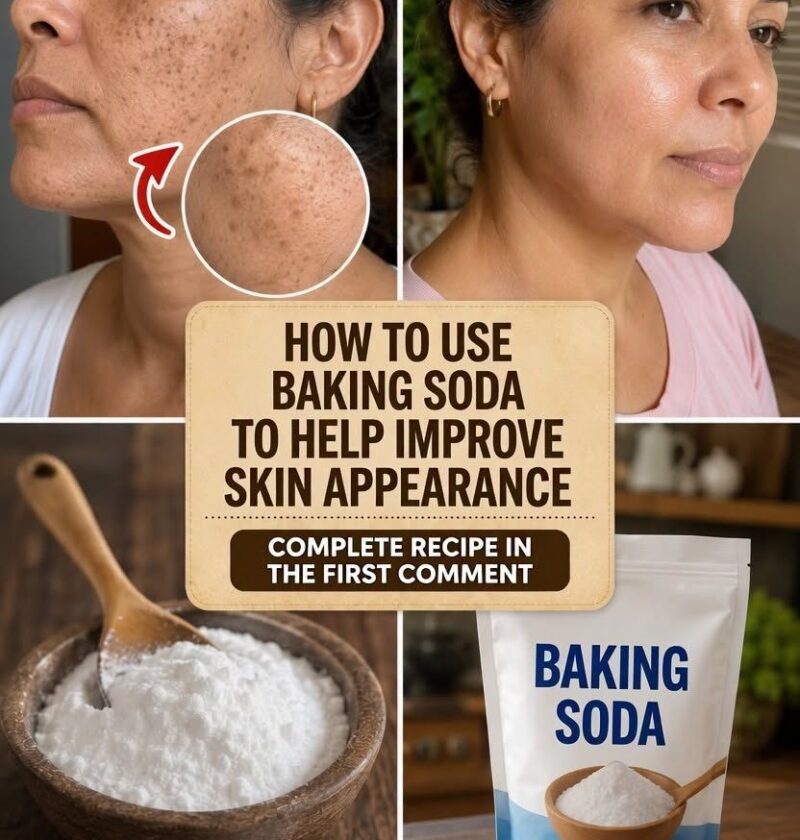
Baking soda (sodium bicarbonate) is sometimes used in DIY skincare, but it is not considered a recommended facial treatment by most dermatologists. It may have some short-term effects, but it also carries risks because it can disrupt the skin’s natural barrier.
Possible benefits people claim
- Mild exfoliation: Baking soda’s fine particles can remove some surface dead skin cells.
- Oil absorption: It may temporarily reduce the feeling of oiliness.
- Soothing effect for some irritations: Some people use it in baths or other preparations, though this does not mean it is suitable for the face.
Risks of using baking soda on your face
- Skin barrier damage: Facial skin is naturally slightly acidic (around pH 4.5–5.5). Baking soda is alkaline and can raise skin pH, potentially causing dryness and irritation.
- Redness and burning: Especially in people with sensitive skin, eczema, rosacea, or acne-prone skin.
- Increased sensitivity: Frequent use may make skin more reactive to products and environmental factors.
- Worsening acne or irritation: Harsh scrubbing can inflame the skin.
If you choose to try it
- Avoid using it as a daily scrub.
- Do a patch test on a small area first.
- Do not use it on broken, irritated, or sunburned skin.
- Avoid mixing it with other strong ingredients (such as acids or retinoids).
- Stop if you feel burning, itching, or increased redness.
Safer alternatives
- For exfoliation: products containing salicylic acid (BHA) or lactic/glycolic acid (AHA) formulated for facial skin.
- For oil control: gentle cleansers and non-comedogenic moisturizers.
- For acne: evidence-based treatments such as benzoyl peroxide, salicylic acid, or dermatologist-recommended options.
Baking soda is useful for many household purposes, but your facial skin usually benefits more from products designed to match its natural pH and barrier needs.