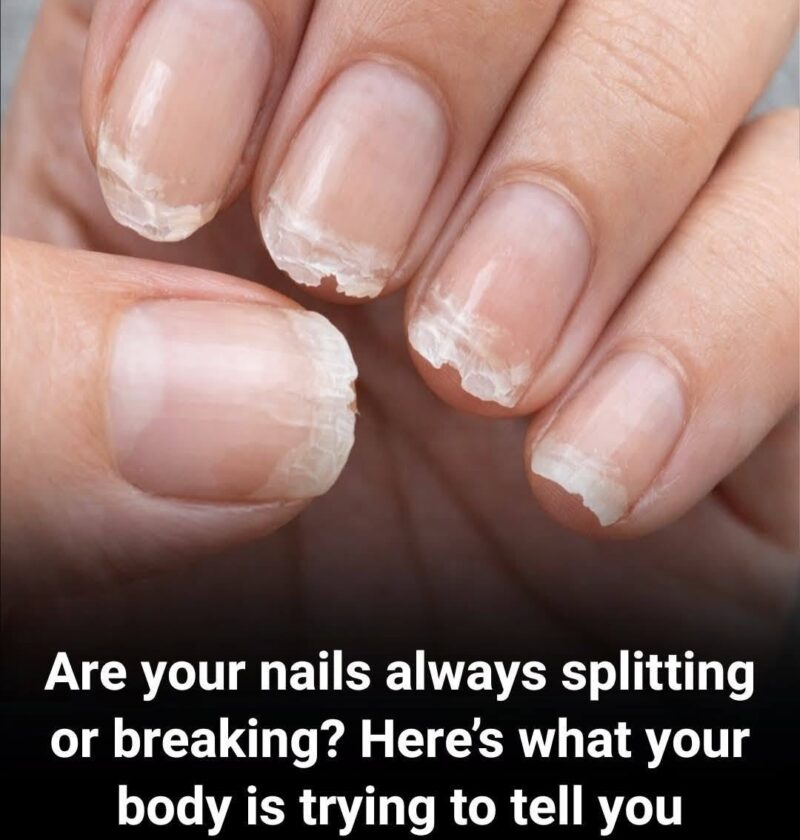
Brittle or fragile nails are often a clue about overall health, nutrition, or daily habits, not just a cosmetic issue. In many cases, they’re harmless—but sometimes they can signal an underlying problem.
Common reasons nails become brittle
1) Nutrient deficiencies
Lack of certain nutrients can weaken nails, especially:
- Iron deficiency (can be linked with anemia)
- Low protein intake
- Low biotin or other B vitamins
- Zinc deficiency
2) Frequent water exposure or chemicals
- Repeated handwashing
- Dishwashing without gloves
- Harsh soaps, detergents, or nail products
These strip natural oils from the nails, making them dry and breakable.
3) Aging
As people get older, nails naturally become:
- Thinner
- Drier
- More prone to splitting
4) Medical conditions
Sometimes brittle nails can be associated with:
- Iron deficiency anemia
- Hypothyroidism
- Skin conditions like eczema or psoriasis
5) Lifestyle factors
- Excessive nail polishing or gel manicures
- Nail biting or picking
- Smoking (can affect nail health and circulation)
What helps improve nail strength
- Eat a balanced diet with protein, iron, and vitamins
- Keep nails moisturized (cuticle oil or hand cream)
- Wear gloves for cleaning or washing dishes
- Avoid harsh nail treatments and acetone-based removers
- Keep nails trimmed and filed smoothly
When to pay attention
See a healthcare provider if brittle nails come with:
- Fatigue, dizziness, or weakness
- Hair loss
- Pale skin
- Sudden or severe nail changes
These could suggest an underlying health issue that needs testing.
Bottom line
Brittle nails are usually a signal of dryness, nutrition gaps, or daily wear-and-tear, but sometimes they can reflect deeper health conditions. If the change is new or persistent, it’s worth looking beyond just nail care.