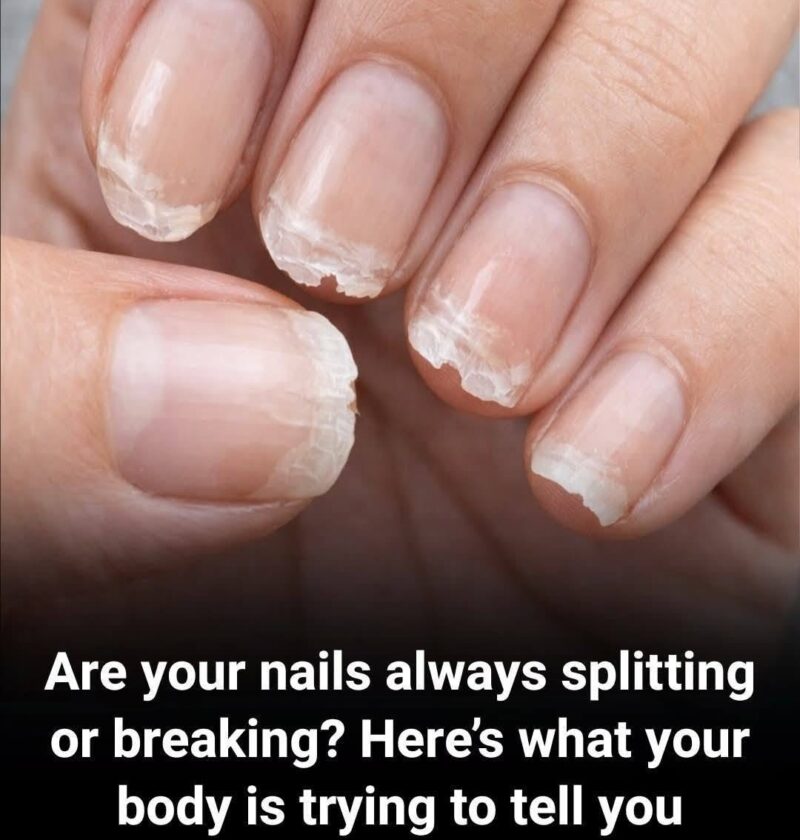
Brittle or fragile nails are common, and they’re usually a clue about irritation, nutrition, or underlying health—not a single specific disease. Nails often reflect general body conditions, but they’re not a precise diagnostic tool.
Common, non-serious causes
Most cases come from everyday factors:
- Frequent wetting and drying (washing dishes, handwashing)
- Harsh chemicals (cleaners, nail polish removers with acetone)
- Aging (nails naturally become drier over time)
- Manicures / gel nails that thin the nail plate
- Low humidity / dry climate
Nutritional or body-related causes
Sometimes brittle nails are linked to:
- Low iron (iron deficiency anemia) – can cause thin, spoon-shaped or fragile nails
- Low protein intake – nails are made of keratin (a protein)
- Zinc deficiency – may affect growth and strength
- Biotin deficiency (rare, but often overstated online)
Medical conditions that can be associated
Not always, but sometimes:
- Thyroid disorders (especially hypothyroidism)
- Psoriasis (can affect nail texture and pitting)
- Fungal infections (thick, brittle, discolored nails)
When to pay attention
Consider medical advice if brittle nails come with:
- Fatigue, dizziness, or pale skin (possible anemia)
- Sudden nail changes across multiple nails
- Pain, swelling, or discoloration
- Slow healing or other systemic symptoms
What actually helps
- Moisturize hands and nails regularly
- Wear gloves for cleaning or dishwashing
- Reduce acetone-based removers
- Ensure enough protein, iron, and zinc in diet
- Keep nails trimmed and avoid over-buffing
Bottom line
Brittle nails are usually caused by external damage or mild deficiencies, not dramatic hidden diseases like viral posts often suggest.
If you want, I can help you narrow it down based on what your nails look like (splitting, ridges, peeling, discoloration, etc.).