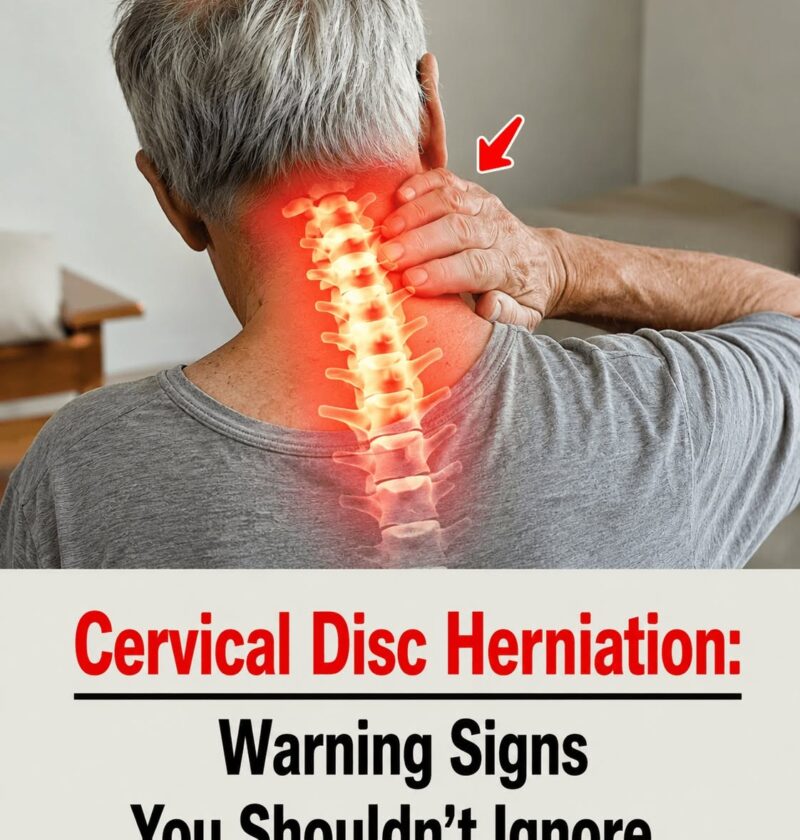
Cervical disc herniation means a disc in the neck spine has bulged or slipped and may press on nearby nerves. It can range from mild irritation to a serious nerve compression problem.
Here are warning signs you should not ignore:
1. Neck pain that doesn’t improve
Persistent pain in the neck, especially if it lasts weeks or worsens with movement, can be an early sign.
2. Pain radiating to the shoulder, arm, or hand
When a disc presses on a nerve, pain may travel down the arm (often called “radicular pain”).
3. Numbness or tingling in the arm or fingers
A common nerve-related symptom, often described as:
- Pins and needles
- “Electric shock” sensation
- Loss of normal feeling
4. Weakness in the arm or grip
You may notice:
- Dropping objects
- Weak hand grip
- Difficulty lifting the arm
This suggests nerve involvement that should be checked.
5. Neck stiffness and reduced movement
Turning or bending the neck may become painful or limited.
6. Pain that worsens with coughing, sneezing, or straining
These actions increase pressure on spinal nerves and can intensify symptoms.
7. Severe symptoms (urgent warning signs)
Seek immediate medical attention if you experience:
- Loss of coordination or balance
- Difficulty walking
- Severe or worsening weakness in arms or legs
- Loss of bladder or bowel control (rare but serious)
These may indicate spinal cord compression.
Related condition
A common cause of these symptoms is Cervical Disc Herniation, sometimes also called a “slipped disc in the neck.”
When to see a doctor
You should get evaluated if:
- Symptoms last more than 1–2 weeks
- Pain radiates into the arm
- You have numbness, tingling, or weakness
- Symptoms are worsening over time
Early treatment can prevent long-term nerve damage.
Bottom line
Cervical disc herniation often starts with neck pain plus arm symptoms (pain, tingling, weakness). The key is not ignoring nerve-related signs, especially weakness or coordination problems.
If you want, I can explain simple exercises and posture habits that reduce pressure on the cervical spine safely.