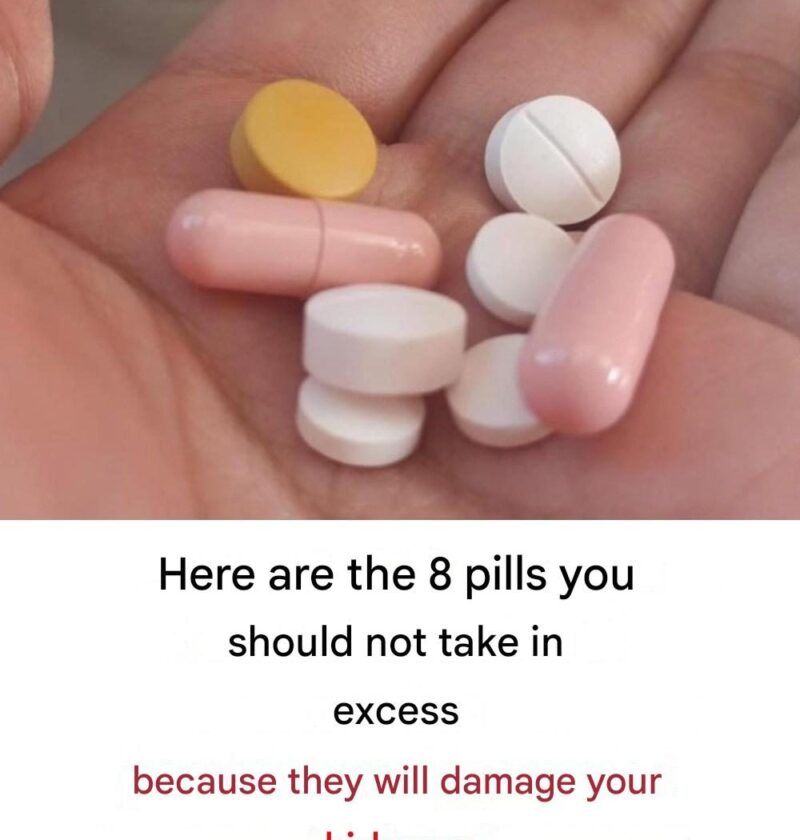
Headlines like “8 pills that damage your kidneys” are usually oversimplified. The reality is: many medications can affect the kidneys, but risk depends on dose, duration, existing health, and hydration, not just the drug name.
Your kidneys are part of the filtration system, and problems usually happen with long-term use, high doses, or combining multiple risky drugs—especially if someone already has kidney disease.
Medications commonly linked to kidney strain (when misused or overused)
Here are some well-known categories doctors monitor carefully:
1. NSAIDs (painkillers)
- Examples: ibuprofen, diclofenac, naproxen
- Can reduce blood flow to kidneys if overused or taken long-term
2. Certain antibiotics
- Some (like aminoglycosides) can affect kidney cells, especially in high doses
3. Diuretics (“water pills”)
- Used for blood pressure and swelling
- Can stress kidneys if dehydration occurs
4. Proton pump inhibitors (acid reducers)
- Long-term use has been linked in some studies to kidney inflammation risk
5. ACE inhibitors / ARBs (blood pressure medicines)
- Examples: lisinopril, losartan
- Can slightly change kidney function initially but are often protective long-term under medical supervision
6. Lithium
- Used in psychiatric conditions
- Known for potential kidney effects with long-term use
7. Certain antiviral or chemotherapy drugs
- Used under strict medical supervision due to kidney load
8. Contrast dye (medical imaging)
- Can temporarily stress kidneys in at-risk patients
Important reality check
- These are not “avoid completely” drugs
- Many are essential and life-saving
- Risk is managed by doctor monitoring, blood tests, and correct dosing
When kidney risk becomes higher
- Dehydration
- Older age
- Diabetes or high blood pressure
- Using multiple medications together
- Self-medicating painkillers for long periods
Bottom line
There is no universal “8 pills you must never take.” Instead, there are medications that require responsible use and medical supervision. The biggest kidney damage risk usually comes from chronic overuse of common painkillers without guidance, not from properly prescribed treatment.
If you want, I can list early warning signs of kidney stress that people often ignore.