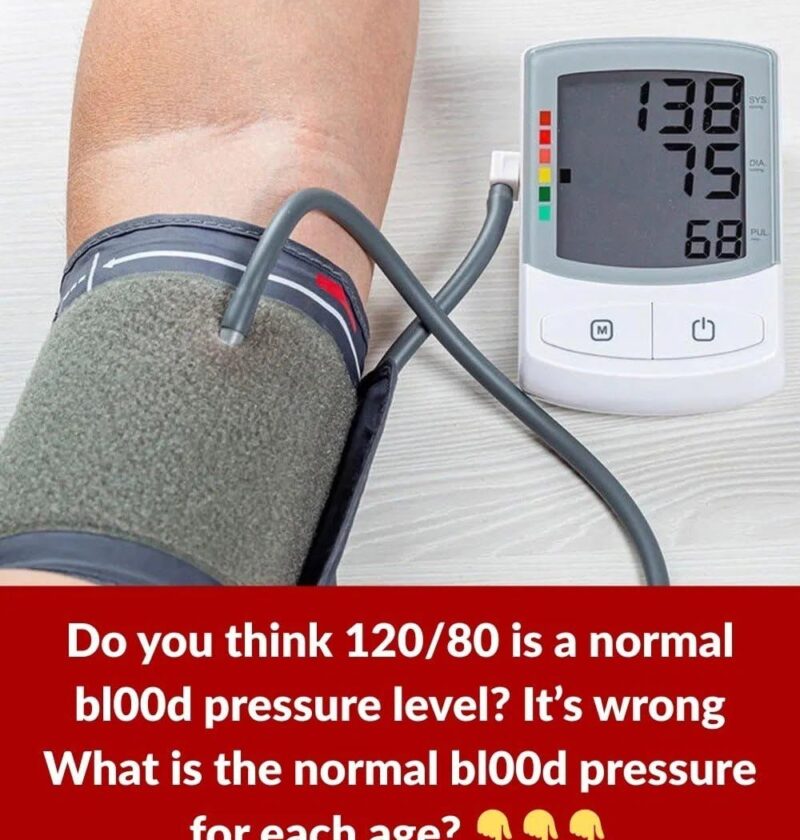
The idea that there is a different “normal blood pressure for each age” is a common misconception. Modern medical guidelines use the same target ranges for most adults, regardless of age.
Blood pressure is measured in millimeters of mercury (mmHg) and written as systolic/diastolic.
🩺 Standard blood pressure categories (adults)
| Category | Systolic | Diastolic |
|---|---|---|
| Normal | Less than 120 | Less than 80 |
| Elevated | 120–129 | Less than 80 |
| High BP (Stage 1) | 130–139 | 80–89 |
| High BP (Stage 2) | 140 or higher | 90 or higher |
| Hypertensive crisis | 180+ | 120+ |
👶 Children & teens
For people under 18, “normal” depends on:
- Age
- Height
- Sex
So doctors use percentile charts instead of one fixed number.
👴 Older adults (65+)
There is no separate “normal” range for older adults, but doctors may individualize targets based on:
- Overall health
- Risk of falls or dizziness
- Heart disease or kidney disease
Many older adults are still advised to aim for:
- Below 130/80 mmHg, if tolerated
⚠️ Important truth
- Blood pressure tends to rise with age naturally
- But higher readings are not considered healthy at any age
- Treatment goals may change, but “normal” does not increase with age
🧠 When to worry
Seek medical advice if:
- Readings are consistently 130/80 or higher
- Or you have symptoms like chest pain, headache, dizziness, or shortness of breath
- Or readings reach 180/120 or higher (emergency)
✔️ Bottom line
There is no separate normal blood pressure chart for each age group in adults. The healthy target remains roughly below 120/80 mmHg, with individualized adjustments based on health conditions.
If you want, I can also show you a simple way to measure blood pressure correctly at home (most people do it wrong).