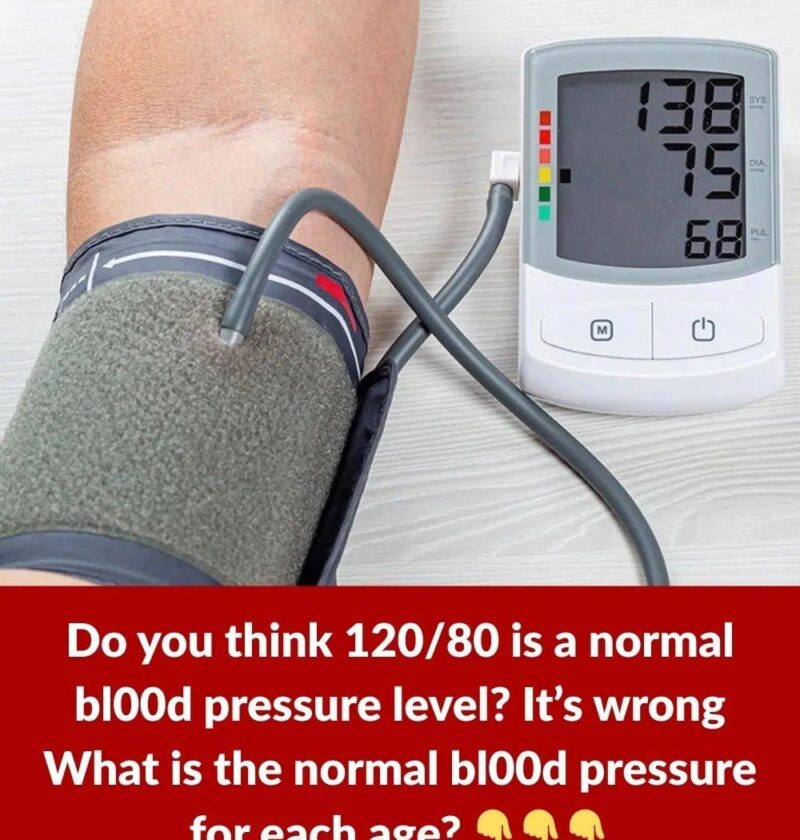
The idea that there is a separate “normal blood pressure for each age” is mostly outdated and often used in misleading health posts.
Modern medicine uses one main standard for adults, with only small differences for children.
A Blood pressure reading is written as:
- Systolic (top number) / Diastolic (bottom number), e.g., 120/80 mmHg
✅ Normal blood pressure (adults)
- Normal: less than 120/80 mmHg
- Elevated: 120–129 / less than 80
- High blood pressure (Stage 1): 130–139 / 80–89
- High blood pressure (Stage 2): ≥140 / ≥90
👉 This applies to most adults of all ages.
👶 Children & teens (general ranges)
Blood pressure changes with growth, so doctors use percentiles:
- Children (1–12 years): lower than adults, varies by height/age
- Teens: gradually approach adult values
- Rough guide: around 90/60 to 110/70 mmHg is often typical depending on age and size
👴 Older adults
A common myth is that “higher BP is normal with age.” That is not fully true.
- Many older adults still aim for below 130/80 mmHg
- Doctors may individualize targets based on frailty, dizziness risk, or other conditions
⚠️ Important reality check
- There is no safe “high normal” just because someone is older
- High blood pressure is still a major risk factor for:
- Stroke
- Heart attack
- Kidney disease
📌 When to be concerned
Seek medical advice if:
- Readings are consistently ≥130/80
- You have headaches, chest pain, dizziness, or vision changes
- BP suddenly spikes very high (e.g., ≥180/120)
🧠 Bottom line
- Normal adult BP: ~120/80 or lower
- Age changes the risk, not the “normal standard”
- High BP is not a normal part of aging
If you want, I can also give you a simple home BP tracking guide or explain what causes sudden BP spikes in daily life.