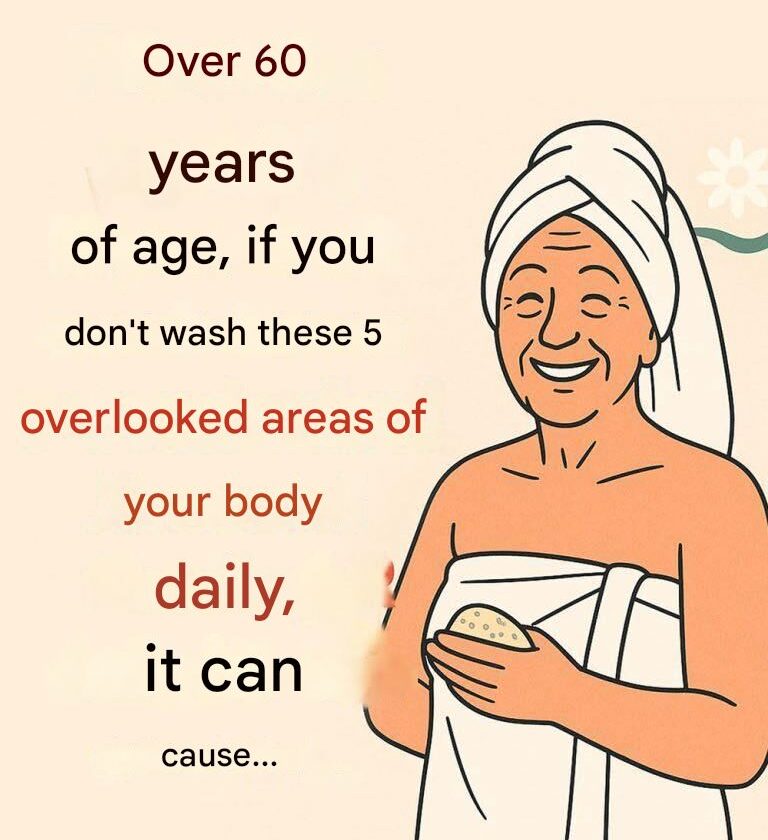
From Age 60 Onward: 5 Often-Overlooked Body Areas You Should Clean Carefully to Stay Fresh, Healthy, and Comfortable
Source: NHS (UK), Mayo Clinic, Cleveland Clinic hygiene and aging care guidance
PART 1: Complete Guide to Personal Hygiene in Older Age (SEO-Optimized, ~1500+ words)
Introduction: Why Hygiene Needs Change After 60
As the body ages, natural changes in skin, mobility, sweat production, and immunity make personal hygiene more important than ever. After the age of 60, many people continue their same daily washing routine, but some areas of the body become harder to clean properly or are simply overlooked.
This can sometimes lead to:
- Body odor
- Skin irritation
- Fungal infections
- Bacterial buildup
- General discomfort
Good hygiene is not just about appearance—it plays a direct role in skin health, infection prevention, and overall well-being.
How Aging Affects Skin and Hygiene Needs
With age:
- Skin becomes thinner and more fragile
- Oil production decreases
- Mobility may reduce
- Sweat and bacteria can accumulate in hidden areas
- Immune response becomes slower
Because of these changes, certain parts of the body require extra attention during bathing and daily cleaning.
1. Behind the Ears: A Commonly Forgotten Area
The skin behind the ears is often missed during regular washing, especially when bathing quickly.
Why it matters:
- Sweat and oil buildup can occur
- Dead skin cells accumulate
- Can cause odor or irritation
How to clean properly:
Gently wash behind the ears using mild soap and warm water. Dry thoroughly to prevent moisture buildup.
Neglecting this area may lead to discomfort or skin infections, especially in warm climates.
2. Between Skin Folds (Neck, Underarms, and Abdomen)
As people age, skin may loosen and create folds where moisture can collect.
Common areas include:
- Neck folds
- Underarms
- Lower abdomen
- Under breasts (in women)
These areas are prone to:
- Sweat accumulation
- Fungal growth
- Rashes (intertrigo)
Proper cleaning and drying help maintain skin health and prevent irritation.
Best practice:
Wash gently, rinse well, and ensure the area is completely dry after bathing.
3. Feet and Between the Toes
Feet are one of the most neglected areas in daily hygiene routines.
Why foot hygiene is important:
- Reduced circulation in older age can affect foot health
- Moisture between toes can lead to fungal infections
- Dead skin can build up on heels
Conditions like athlete’s foot can develop if feet are not cleaned and dried properly.
Proper care includes:
- Washing feet daily
- Cleaning between toes carefully
- Drying thoroughly
- Wearing clean, breathable socks
4. Under the Nails and Nail Beds
Fingernails and toenails naturally collect dirt, bacteria, and debris over time.
Why it’s often missed:
- Hard to see buildup
- Reduced hand flexibility in older adults
- Thicker nails with age
Poor nail hygiene can lead to:
- Bacterial infections
- Fungal growth
- Unpleasant odor
Cleaning advice:
- Trim nails regularly
- Use a soft brush to clean under nails
- Avoid aggressive scraping that may damage skin
5. Back and Upper Shoulders
The back is one of the hardest areas to reach, especially for individuals with limited mobility.
Why it matters:
- Sweat can accumulate
- Dead skin cells may build up
- Can lead to itching or irritation
Since it’s difficult to clean properly without assistance, many people unintentionally neglect this area.
Helpful solutions:
- Use a long-handled sponge or brush
- Ask for assistance if needed
- Shower chairs or handheld shower heads can help
Additional Hygiene Tips for Adults Over 60
Beyond specific body areas, overall hygiene habits also play an important role in health.
1. Use Gentle Soap
Mild, fragrance-free cleansers help protect sensitive aging skin.
2. Avoid Very Hot Water
Hot water can dry out skin and increase irritation.
3. Moisturize After Bathing
Helps maintain skin hydration and barrier protection.
4. Stay Hydrated
Healthy skin begins from within.
5. Wear Breathable Clothing
Cotton fabrics reduce sweating and irritation.
Common Hygiene Problems in Older Adults
Some issues may arise if hygiene is neglected:
- Skin infections
- Fungal growth
- Persistent body odor
- Dry, cracked skin
- Itching or rashes
Most of these can be prevented with proper daily care.
When to Seek Medical Advice
Consult a healthcare provider if:
- Skin becomes red, swollen, or painful
- Persistent odor does not improve
- Fungal infections keep returning
- Open wounds or sores develop
Early treatment helps prevent complications.
Final Thoughts: Small Habits, Big Health Impact
Maintaining hygiene after 60 is not about complicated routines—it’s about paying attention to small, often-missed areas of the body.
By regularly cleaning behind the ears, skin folds, feet, nails, and the back, older adults can significantly improve comfort, skin health, and overall freshness.
Good hygiene supports not only physical health but also confidence and quality of life.
PART 2: Simple Daily Hygiene Checklist (Age 60+)
5 Areas to Clean Carefully
1. Behind the ears
- Wash gently with soap and water
2. Skin folds (neck, underarms, abdomen)
- Clean and dry completely
3. Feet & toes
- Wash daily and dry well
4. Under nails
- Trim and clean regularly
5. Back & shoulders
- Use a long brush or assistance
Simple Daily Care Tips
- Use mild soap
- Avoid very hot water
- Moisturize skin after bathing
- Wear clean, breathable clothes
If you want, I can also turn this into:
- A viral Facebook/SEO health post
- A YouTube script for older adult care
- Or a “Top 10 hygiene mistakes after 60” article with higher search ranking keywords