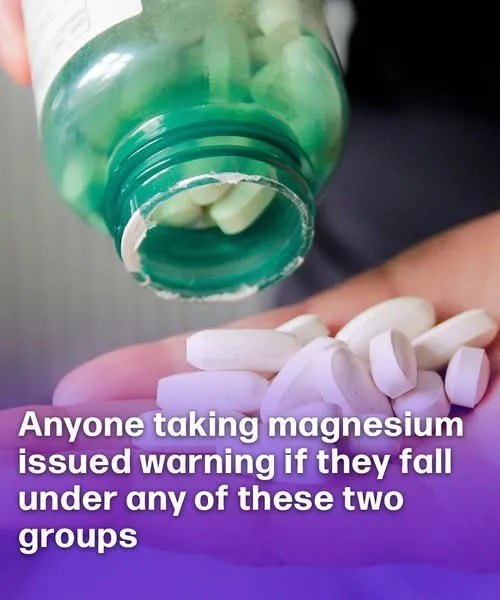
Recent health advisories about magnesium supplements generally aren’t saying magnesium is “dangerous” for most people—but they are emphasizing that too much or unnecessary supplementation can be risky for specific groups.
What the warning is about
Magnesium is essential for muscle, nerve, and heart function, and many people take it for sleep, cramps, or constipation. The concern is over-supplementation leading to hypermagnesemia (excess magnesium in the blood), which can become serious in certain situations.
The two high-risk groups most often highlighted
1) People with kidney disease
The kidneys are responsible for removing excess magnesium. If kidney function is reduced, magnesium can build up in the body.
This can lead to symptoms like:
- Low blood pressure
- Nausea or vomiting
- Muscle weakness
- Irregular heartbeat (in severe cases)
2) Older adults (especially with other health conditions or medications)
Older adults are more likely to:
- Have reduced kidney function (even without diagnosed kidney disease)
- Be taking multiple medications that interact with magnesium (such as certain antibiotics or heart/blood pressure drugs)
Why experts are concerned now
Many magnesium supplements are sold over-the-counter and sometimes taken at high doses “for wellness” without medical need. Health professionals are warning that:
- People often exceed recommended daily limits
- Symptoms of excess magnesium can be mistaken for fatigue or aging
- Risk increases significantly when kidney function is not optimal
Key takeaway
For most healthy people, magnesium from food (nuts, grains, leafy greens) is safe. The caution is mainly about high-dose supplements without medical supervision, especially in people with kidney problems or older adults with complex health conditions.
If you want, I can break down the safe daily magnesium intake limits or signs that someone might be taking too much.