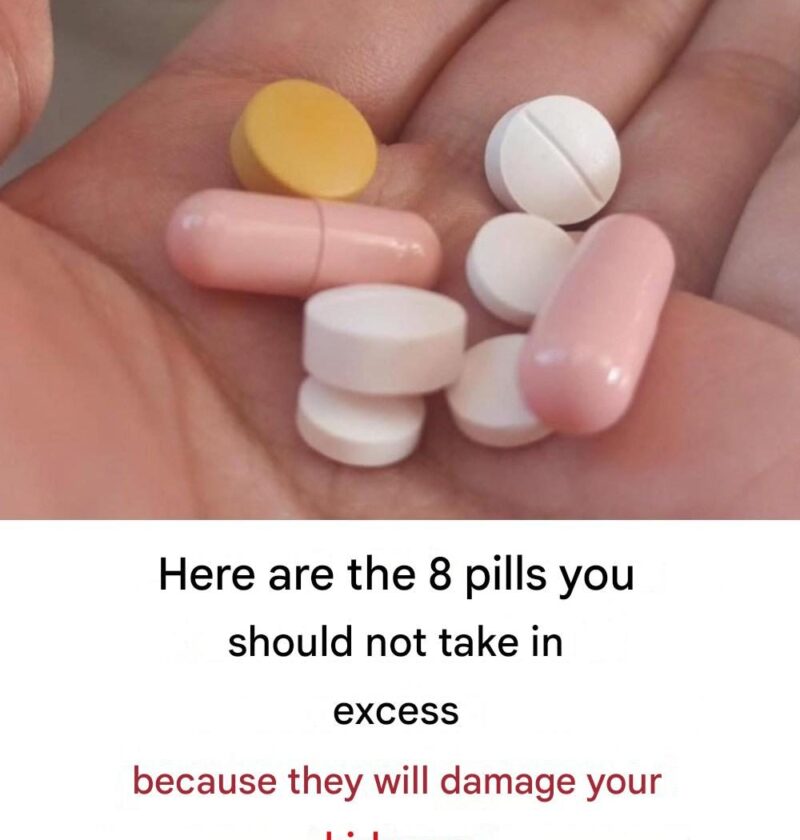
There isn’t a safe “universal list” of pills everyone must avoid, but there are certain medications and supplements that can damage the kidneys—especially if used in high doses, for long periods, or without medical supervision.
Here are 8 commonly known types of pills that can harm the kidneys:
1) NSAID painkillers
Examples: ibuprofen, diclofenac, naproxen
These are among the most common causes of kidney injury when overused. They reduce blood flow to the kidneys, especially risky in dehydration or older age.
2) Certain antibiotics (aminoglycosides)
Examples: gentamicin, amikacin
Used for serious infections. They can directly damage kidney cells if not carefully monitored.
3) Proton Pump Inhibitors (PPIs)
Examples: omeprazole, esomeprazole
Long-term use has been linked to chronic kidney inflammation and, in some cases, kidney decline.
4) Lithium (mood stabilizer)
Used for bipolar disorder. Long-term use can slowly reduce kidney function if blood levels are not closely controlled.
5) Antiviral drugs (some types)
Example: acyclovir (especially high doses or IV forms)
Can crystallize in the kidneys and cause injury if hydration is poor.
6) Chemotherapy drugs
Example: cisplatin
Highly effective against cancer but well-known for being toxic to kidney tissue.
7) Certain herbal or “natural” pills
Some traditional remedies contain aristolochic acid, which is strongly linked to severe kidney damage and even kidney failure.
8) High-dose vitamin C supplements
Not usually dangerous in normal amounts, but very high doses can increase oxalate levels and contribute to kidney stones and stress on kidneys.
Important note
Most of these medicines are not “bad” by default—they are widely used and can be life-saving. The real risk comes from:
- long-term unsupervised use
- dehydration
- high doses
- existing kidney disease (Chronic Kidney Disease)
If you want, I can also tell you:
- early signs your kidneys are being affected
- which painkillers are safest for kidney health
- or how to protect kidneys in daily life