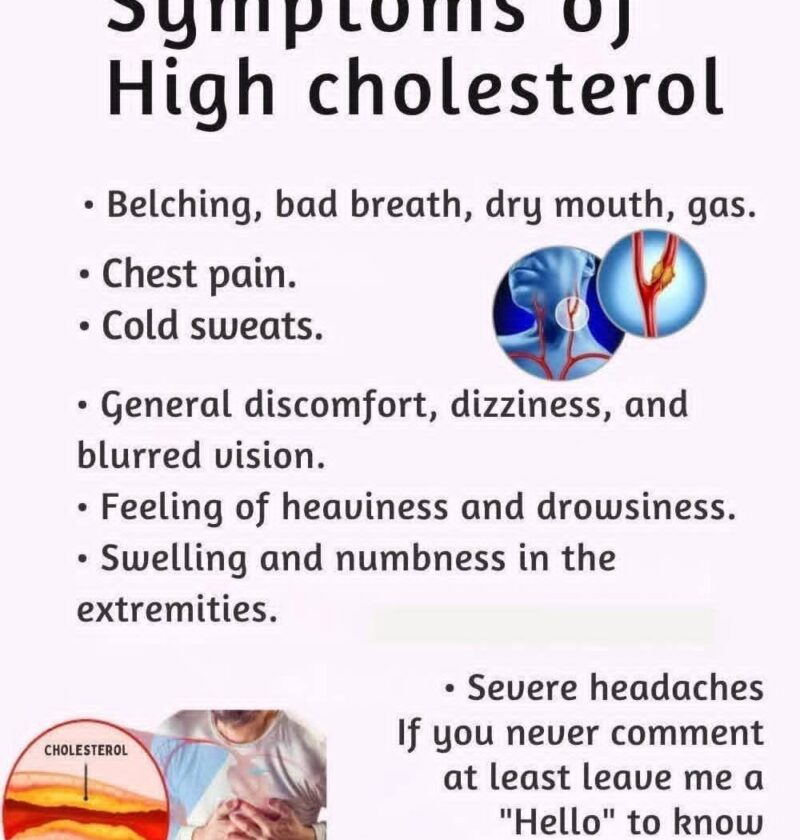
That’s another fear-based clickbait post. It mixes a true concept with misleading framing.
🫀 Does high cholesterol “kill silently”?
High cholesterol usually has no obvious symptoms, which is why it’s often called a “silent” risk factor—but it doesn’t “kill suddenly” by itself.
Instead, over time it can contribute to:
- Heart disease
- Stroke
- Blocked arteries (atherosclerosis)
The danger comes from long-term artery damage, not immediate symptoms.
🚨 Can you recognize signs of high cholesterol?
Here’s the key truth:
❌ Most people have NO symptoms
You usually cannot feel high cholesterol.
⚠️ Rare visible signs (in severe or long-term cases)
- Yellowish fat deposits around eyes (xanthelasma)
- Fatty lumps on tendons (xanthomas)
- Gray-white ring around the cornea (in older adults)
But these are uncommon and usually appear after long-standing high levels.
🧪 The only reliable way to know
A simple blood test called a lipid profile measures:
- LDL (“bad” cholesterol)
- HDL (“good” cholesterol)
- Triglycerides
That’s the only accurate diagnosis method.
🛡️ Real ways to prevent high cholesterol
Forget “first comment tricks”—prevention is actually straightforward:
Diet
- Reduce trans fats and deep-fried foods
- Eat more fiber (fruits, vegetables, oats)
- Choose healthy fats (olive oil, nuts, fish)
Lifestyle
- Regular exercise (at least 150 min/week)
- Maintain healthy weight
- Avoid smoking
Medical care
- Some people need cholesterol-lowering medication (like statins)
🧠 Bottom line
High cholesterol is a silent risk factor, not a condition with obvious daily symptoms. Social media posts exaggerate “warning signs” to drive engagement—the real answer is blood testing, not guessing symptoms.
If you want, I can also explain what LDL and HDL numbers actually mean in simple terms so you can read your own test report easily.