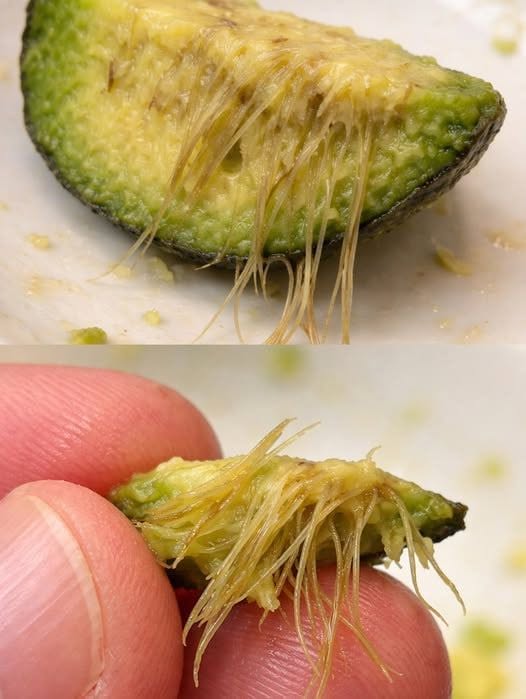
If the “strange strings” you’re referring to are the thin brown, black, or tan thread-like strands sometimes found in avocado flesh, they’re usually vascular bundles—the avocado’s nutrient and water transport system (similar to veins in a leaf).
What causes them to become noticeable?
These strings can become more visible when:
- The avocado is very mature or overripe.
- The fruit has experienced temperature stress during storage or transport.
- Natural aging causes the vascular tissue to darken.
Are they safe to eat?
In most cases, yes. Vascular browning is generally a quality issue rather than a safety issue. The avocado may have a slightly altered texture or flavor around the strings, but it is usually not harmful.
When should you throw the avocado away?
Discard it if you notice:
- Mold (fuzzy white, gray, green, or black growth)
- A sour, fermented, or unpleasant odor
- Extensive rot or slimy areas
- Large portions of flesh that are blackened and mushy
A quick rule of thumb
- Thin strings or veins with otherwise normal-looking green flesh: usually fine.
- Fuzzy growth, bad smell, slime, or widespread decay: don’t eat it.
If you have a photo, I can help determine whether what you’re seeing is normal vascular tissue, sprouting,