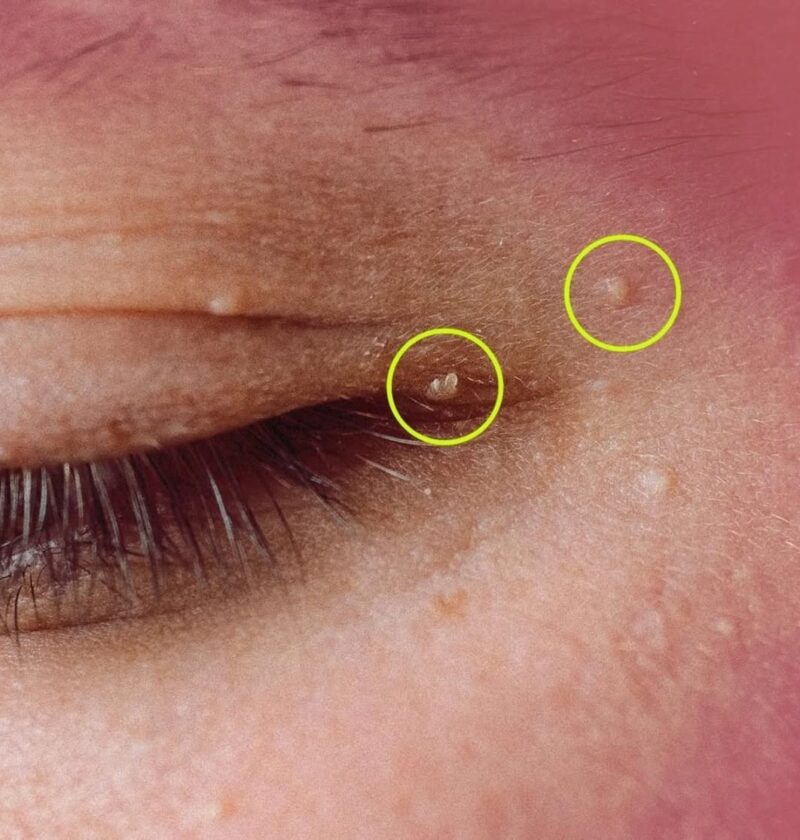
Milia are tiny white or yellowish bumps that commonly appear around the eyes, cheeks, nose, and forehead. They’re often mistaken for “fat cysts,” but they’re actually small cysts filled with keratin (a protein found in skin, hair, and nails), not fat.
How to get rid of milia
1. Don’t squeeze or pick them
Unlike pimples, milia don’t have an opening to the skin surface. Picking at them can cause irritation, infection, or scarring.
2. Gentle exfoliation
Regular exfoliation may help prevent new milia from forming:
- Mild chemical exfoliants such as alpha hydroxy acids (AHAs) or beta hydroxy acids (BHAs)
- Gentle exfoliating cleansers a few times per week
Avoid harsh scrubs, especially around the eyes.
3. Use retinoids (if appropriate)
Topical retinoids can help increase skin cell turnover and may gradually improve milia. Examples include prescription retinoids or over-the-counter retinol products. Retinoids can irritate sensitive skin and are generally not recommended during pregnancy.
4. Professional removal
A dermatologist can remove milia safely using techniques such as:
- Sterile extraction with a fine needle or blade
- Electrocautery
- Cryotherapy in selected cases
- Chemical peels or other dermatologic procedures when appropriate
Professional removal is often the quickest and safest option.
5. Review skincare products
Heavy creams, thick ointments, and some occlusive products may contribute to milia in susceptible individuals. If you’re prone to milia, lighter non-comedogenic products may be preferable.
When to see a dermatologist
Consider an evaluation if:
- The bumps persist for months
- They are widespread or increasing
- You’re unsure whether they’re milia or another skin condition
- They occur after skin injury, burns, or rashes
Most milia are harmless and may occasionally resolve on their own, but persistent lesions often require professional extraction for complete removal.
If you tell me:
- Your age
- Where the milia are located (under eyes, cheeks, eyelids, etc.)
- How long you’ve had them