Why Homemade Herbicides Work (Science Behind It)
Weeds survive because they:
- Absorb water and nutrients
- Grow quickly in disturbed soil
- Compete for sunlight and space
Most natural herbicide mixtures work by:
- Drying out plant tissues
- Breaking down waxy leaf coatings
- Disrupting water balance inside the plant
This causes weeds to weaken and die over time, especially small or young growth.
🧴 Common Ingredients Used in DIY Weed Killers
🧂 1. Vinegar (Acetic Acid)
White vinegar is one of the most popular natural weed control ingredients.
How it works:
- Draws moisture out of leaves
- Burns plant surface cells
- Works best on young weeds
🧂 2. Salt
Salt helps prevent weed regrowth by affecting soil balance.
How it works:
- Dehydrates plant roots
- Makes soil less suitable for growth
⚠️ Use carefully—too much can damage soil long-term.
🧼 3. Dish Soap
Dish soap helps the solution stick to leaves.
How it works:
- Breaks waxy surface of weeds
- Helps other ingredients absorb better
🔥 4. Boiling Water (Simple but Effective)
Hot water can kill weeds instantly.
How it works:
- Destroys plant cells on contact
- Best for cracks and small patches
🧪 Part 2: Super Effective Homemade Herbicide Recipe
🧾 Ingredients:
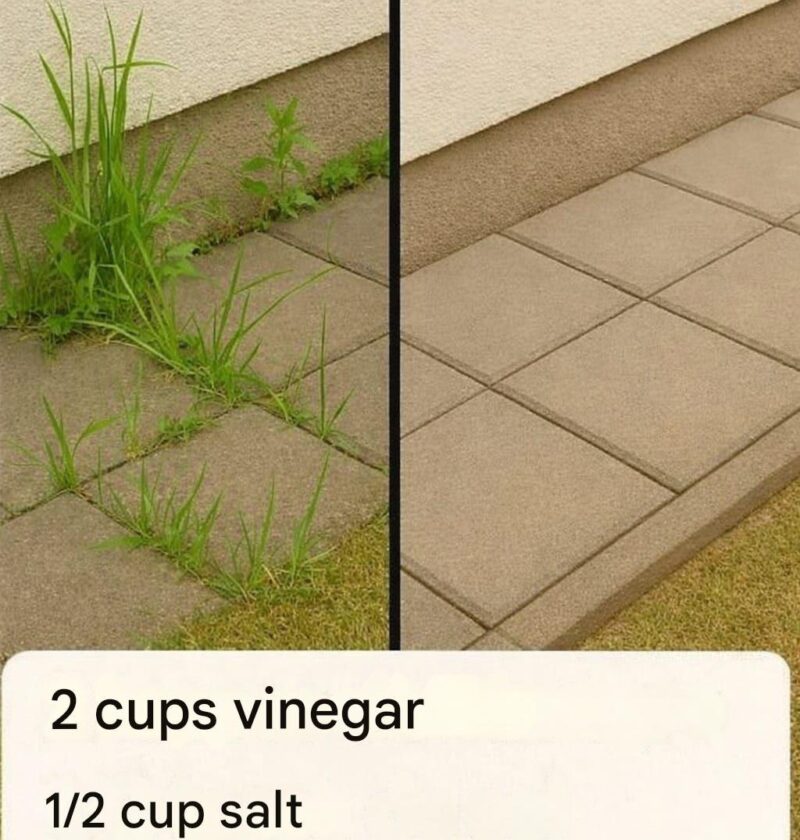
- 1 liter white vinegar
- 2–3 tablespoons salt
- 1–2 teaspoons liquid dish soap
🧴 Method:
Step 1: Mix the solution
- Pour vinegar into a spray bottle or container
- Add salt and stir until mostly dissolved
- Add dish soap and gently mix
Step 2: Apply carefully
- Spray directly onto weed leaves
- Target the base and growth areas
- Avoid spraying nearby plants
Step 3: Choose the right time
- Apply on a sunny, dry day
- Sunlight helps speed up drying and plant damage
Step 4: Repeat if needed
- Tough weeds may need a second application after a few days
🌞 When It Works Best
This homemade herbicide is most effective on:
- Young weeds
- Small patches
- Driveways and sidewalks
- Cracks in concrete
It may be less effective on deep-rooted or mature weeds.
⚠️ Limitations to Know
- Does NOT selectively kill weeds
- Can affect soil health if overused
- May require repeated applications
- Not as strong as commercial herbicides
🌿 Eco-Friendly Alternatives
If you want safer options:
- Hand pulling weeds
- Mulching garden beds
- Using landscape fabric
- Regular mowing
📚 Sources
- USDA Natural Resources Conservation Service – Weed management
- University Extension Programs (Cornell, UC Agriculture) – Integrated weed control
- Environmental Protection Agency (EPA) – Herbicide safety guidance
- Royal Horticultural Society (RHS) – Weed control methods
🌱 Final Summary
A homemade herbicide using vinegar, salt, and dish soap can be an effective short-term solution for controlling weeds in non-crop areas. However, it should be used carefully to avoid damaging surrounding plants and soil.