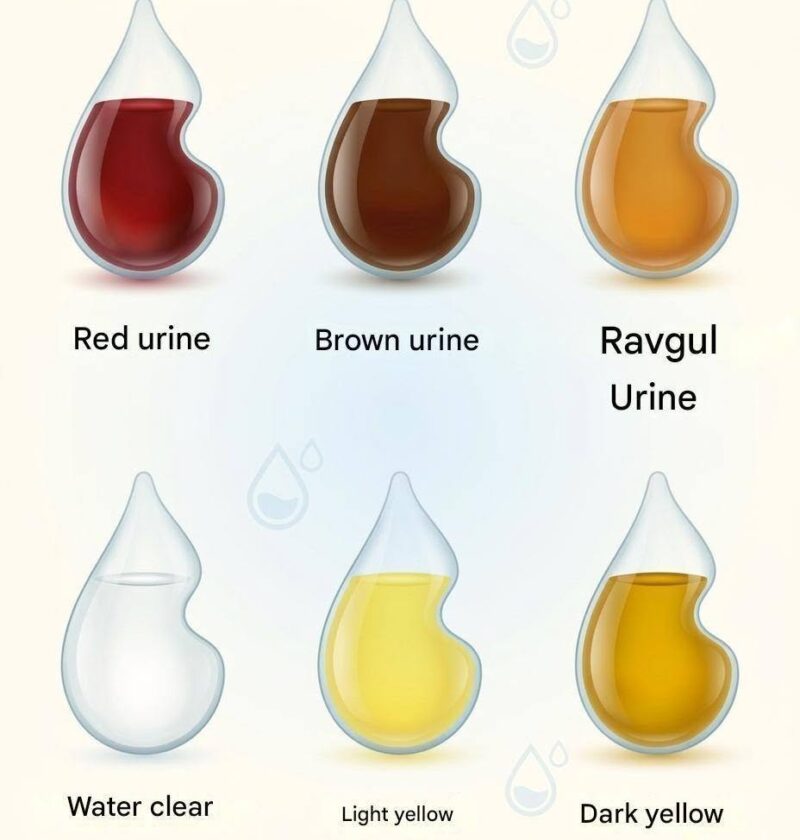
The color of your urine can give useful clues about hydration and sometimes health conditions. It’s not a diagnosis on its own, but it can be an early signal that something is off.
Here’s a simple guide:
💧 1. Clear urine
- Usually means: very well hydrated
- Sometimes: drinking too much water
👉 Generally fine, but constantly completely clear urine may mean you’re overhydrating.
🌾 2. Light yellow (straw color) — ideal
- Normal and healthy hydration
- Good balance of fluids
👉 This is the “best” target color.
🍯 3. Dark yellow / amber
- Mild dehydration (most common cause)
- You need more water
👉 Often seen in morning urine or after sweating.
🍊 4. Deep amber or honey-colored
- Significant dehydration
- Can also occur with vitamin supplements (especially B-complex)
🟠 5. Orange urine
Possible causes:
- Dehydration
- Certain medications
- Rarely, liver or bile duct issues
If it persists, it may need medical attention.
🌈 6. Pink or red urine
Possible causes:
- Beets, berries, or food dyes
- Blood in urine (important warning sign)
Related conditions can include infection, kidney stones, or other issues—needs checking if unexplained.
🟢 7. Blue or green urine (rare)
- Certain medications or dyes
- Rare bacterial infections
🟤 8. Brown or cola-colored
Possible causes:
- Severe dehydration
- Liver problems
- Muscle breakdown (rare but serious)
This should be checked if not diet-related.
⚪ 9. Cloudy urine
- Possible urinary tract infection
- Sometimes dehydration or excess minerals
🚩 When to see a doctor
Get checked if you notice:
- Blood (red/pink) without food explanation
- Brown or very dark urine consistently
- Pain, burning, fever, or foul smell
- Persistent unusual color for more than a day or two
🧠 Key takeaway
- Light yellow = healthy
- Dark = drink more water
- Red/brown/persistent changes = check with a doctor
If you want, I can also explain urine smell, foam, or frequency changes and what they mean for health.