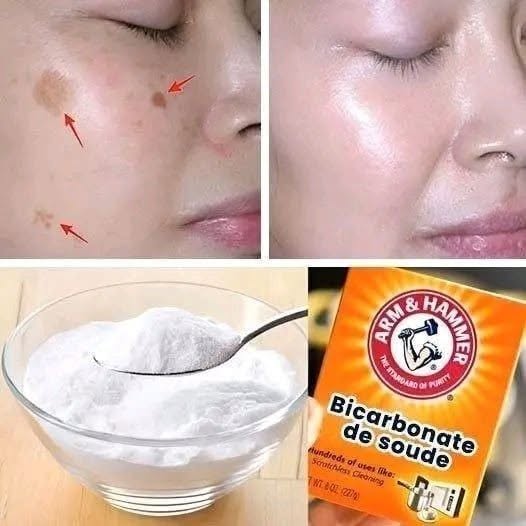
Baking soda is often promoted online as a home remedy for dark spots, wrinkles, and dark circles, but there is no good scientific evidence that it effectively treats these concerns. In fact, using baking soda on your face can do more harm than good.
Why baking soda isn’t recommended
Baking soda has a high pH (around 8–9), while healthy skin is naturally slightly acidic (around 4.5–5.5). Applying it regularly can:
- Disrupt the skin’s protective barrier.
- Cause dryness, irritation, and redness.
- Worsen sensitive skin, eczema, or acne.
- Increase the risk of post-inflammatory dark spots after irritation.
Better options for each concern
For dark spots (hyperpigmentation):
- Daily sunscreen (SPF 30 or higher) is the most important step.
- Ingredients with evidence include:
- Vitamin C
- Niacinamide
- Azelaic acid
- Retinoids (used gradually)
- Tranexamic acid (in some products)
For wrinkles:
- Retinoids (retinol or prescription tretinoin)
- Sunscreen every day
- Moisturizers containing hyaluronic acid or ceramides
- Vitamin C serum
For dark circles:
- Get adequate sleep and manage allergies if present.
- Use sunscreen around the eyes.
- Products with caffeine or retinol (formulated for the eye area) may help some people.
- If dark circles are due to genetics or thin skin, topical treatments may have limited benefit.
If you still want to try baking soda
It’s safest to avoid applying it to your face. If you choose to use it anyway:
- Do not scrub aggressively.
- Do not use it around your eyes.
- Stop immediately if you notice burning, redness, or irritation.
A simple evidence-based routine
Morning:
- Gentle cleanser.
- Vitamin C or niacinamide serum.
- Moisturizer.
- Broad-spectrum SPF 30+ sunscreen.
Night:
- Gentle cleanser.
- Retinol (2–3 nights per week at first, if appropriate for your skin).
- Moisturizer.
With consistent use, dark spots often begin to improve over 8–12 weeks, while wrinkle improvement usually takes 3–6 months. If you have persistent pigmentation, deep wrinkles, or severe dark circles, a dermatologist can recommend treatments such as prescription creams, chemical peels, lasers, or fillers, depending on the cause.