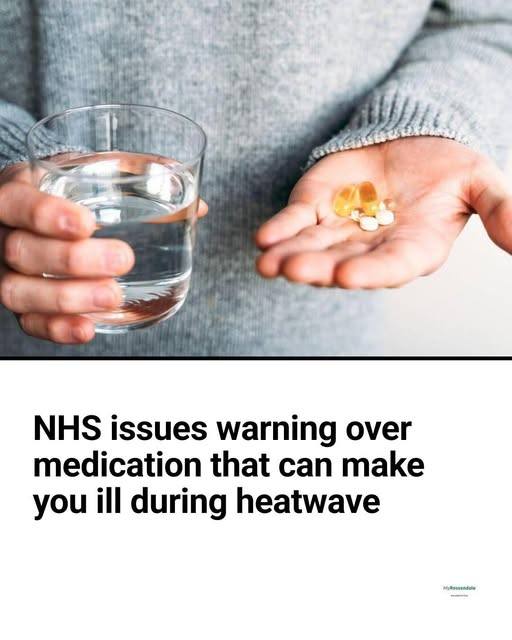
That line is typical of a viral warning, but the underlying issue is real: the National Health Service (NHS) does warn that some medicines can increase risk during heatwaves by affecting hydration, sweating, or how the body regulates temperature.
Here are the main medication groups that can make people more vulnerable in hot weather:
1) Diuretics (“water tablets”)
- Used for high blood pressure or heart failure
- Can increase fluid loss → dehydration risk
2) Antidepressants
- Especially SSRIs and tricyclics
- Can affect sweating and temperature control
3) Antipsychotics
- May interfere with the body’s ability to regulate heat
4) Antihistamines
- Older types (sedating ones) can reduce sweating
5) Beta blockers
- May reduce blood flow to skin, limiting cooling
6) ACE inhibitors / blood pressure medicines
- Can contribute to dizziness and dehydration in heat
7) Opioid painkillers
- Can impair thermoregulation and increase drowsiness
8) Anticholinergic medicines
- Found in some bladder, allergy, and motion sickness drugs
- Reduce sweating → higher overheating risk
Why this matters
Your body normally cools itself by sweating and increasing blood flow to the skin. Some medicines interfere with these processes, so in high temperatures you can overheat more easily.
Practical safety tips
- Drink water regularly (don’t wait for thirst)
- Avoid peak sun hours (11am–4pm)
- Stay in shade or cool rooms/fans
- Avoid alcohol in heat
- Don’t stop prescribed medication without medical advice
If you want, tell me what medications you’re concerned about and I can explain the specific heat risk for those.