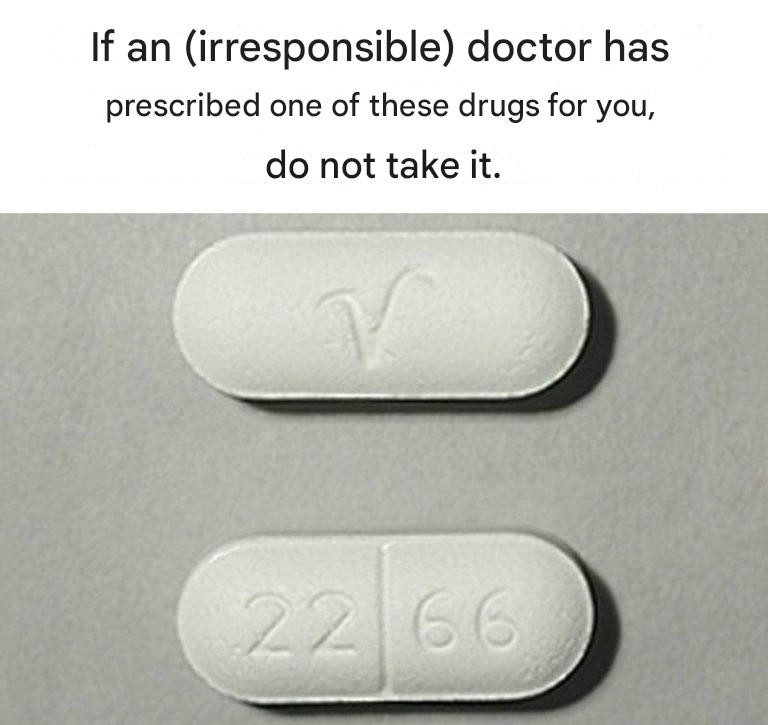
“If a Doctor Ever Prescribed You One of These Medications, You Should Read This Immediately”
On its own, it doesn’t tell you which medications are involved, what the concern is, or whether the information is accurate.
What to do instead
If you see a claim like this:
- Find the actual medication names.
- A warning is meaningless without knowing which drugs are being discussed.
- Check the source.
- Is it a reputable medical organization, a government health agency, a peer-reviewed study, or just a social media post?
- Don’t stop prescribed medication suddenly.
- Many medications can cause serious problems if discontinued abruptly, including blood pressure medicines, antidepressants, anti-seizure drugs, and steroids.
- Look for specifics.
- Legitimate safety information explains:
- What the risk is
- How common it is
- Who is affected
- What patients should do
- Legitimate safety information explains:
Why headlines like this are misleading
Nearly every medication has potential side effects and risks. That doesn’t mean it shouldn’t be used. Doctors prescribe medications after weighing:
- Benefits
- Risks
- Alternative treatments
- Individual patient factors
A drug can be lifesaving for one person and inappropriate for another.
If you have the list, I can help
If you paste the article, the medication names, or a screenshot of the claim, I can explain:
- What each medication is used for
- The real risks and side effects
- Whether the warning is supported by evidence
- What patients should know before making any changes to their treatment
Without the actual list of medications, there’s no way to determine whether the warning is important, exaggerated, or completely misleading.