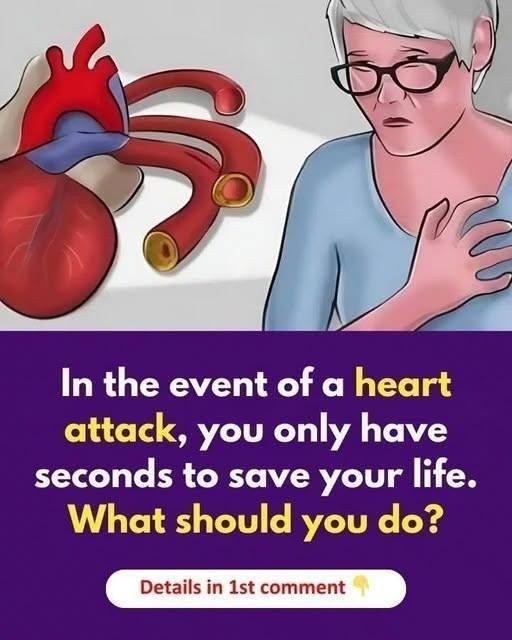
If you think you or someone else is having a heart attack, act immediately. You usually have more than “seconds,” but every minute matters because heart muscle can be damaged when blood flow is blocked.
What to do:
- Call emergency services right away (for example, your local emergency number). Do not try to drive yourself to the hospital.
- Sit down and rest in a comfortable position. Avoid walking around or exerting yourself.
- Chew an aspirin only if it is safe for you:
- If you are not allergic to aspirin,
- You have not been told to avoid it (for example, due to certain bleeding risks),
- And emergency guidance in your area supports it.
Chewing aspirin may help reduce clot formation during some heart attacks.
- Unlock the door and keep your phone nearby if you are alone, so responders can reach you.
- If the person becomes unresponsive and is not breathing normally, someone nearby should:
- Call emergency services
- Start CPR
- Use an AED (automated external defibrillator) if available
Possible heart attack symptoms include:
- Chest pressure, squeezing, heaviness, or pain
- Pain spreading to the arm, jaw, back, neck, or shoulder
- Shortness of breath
- Cold sweat
- Nausea or vomiting
- Sudden weakness or unusual fatigue
Symptoms can be different in women, older adults, and people with diabetes, and may be less “classic.”
If this question is about someone having symptoms right now, tell me what is happening (age, symptoms, when they started, and location), but call emergency services first.