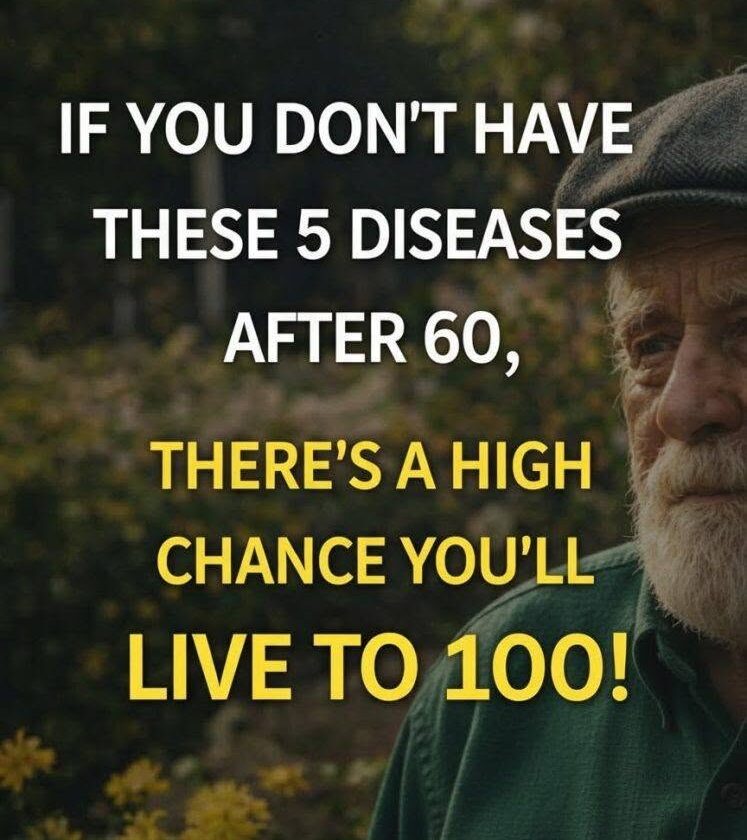
That headline is another example of oversimplified “longevity clickbait.”
There is no reliable rule that says: “Avoid these 5 diseases at 60 → you’ll likely live to 100.” Human lifespan depends on many interacting factors: genetics, lifestyle, healthcare access, environment, and chance.
That said, the core idea behind these articles is partly true: reaching older age without major chronic diseases does increase your chances of living longer.
What these “5 diseases” usually are
These lists typically refer to major age-related conditions like:
1) Heart disease
Often linked to Coronary artery disease
2) Stroke or vascular disease
Related to Stroke
3) Cancer
A broad group of diseases involving uncontrolled cell growth.
4) Diabetes
Usually type 2, affecting blood sugar control and long-term organ health.
5) Chronic lung disease
Such as Chronic Obstructive Pulmonary Disease
Why the claim is misleading
1) No “guaranteed path” to 100
Even people without these diseases may not live to 100 due to:
- genetics
- infections
- accidents
- other age-related conditions
2) Diseases don’t act in isolation
Many people develop mild or well-managed forms of these conditions and still live long lives.
3) Longevity is multifactorial
More important predictors include:
- blood pressure control
- physical activity
- diet quality
- smoking status
- social connection
- stress levels
What science actually supports
Research on “successful aging” shows that people who:
- avoid smoking
- maintain healthy weight
- stay active
- control blood pressure and sugar
tend to live longer and healthier—not guaranteed to 100, but with better odds of reaching advanced age.
Bottom line
These articles are based on a real concept (disease-free aging improves longevity) but exaggerate it into a false certainty about living to 100.
If you want, I can tell you the most evidence-based habits that actually increase lifespan (based on large population studies, not internet myths).