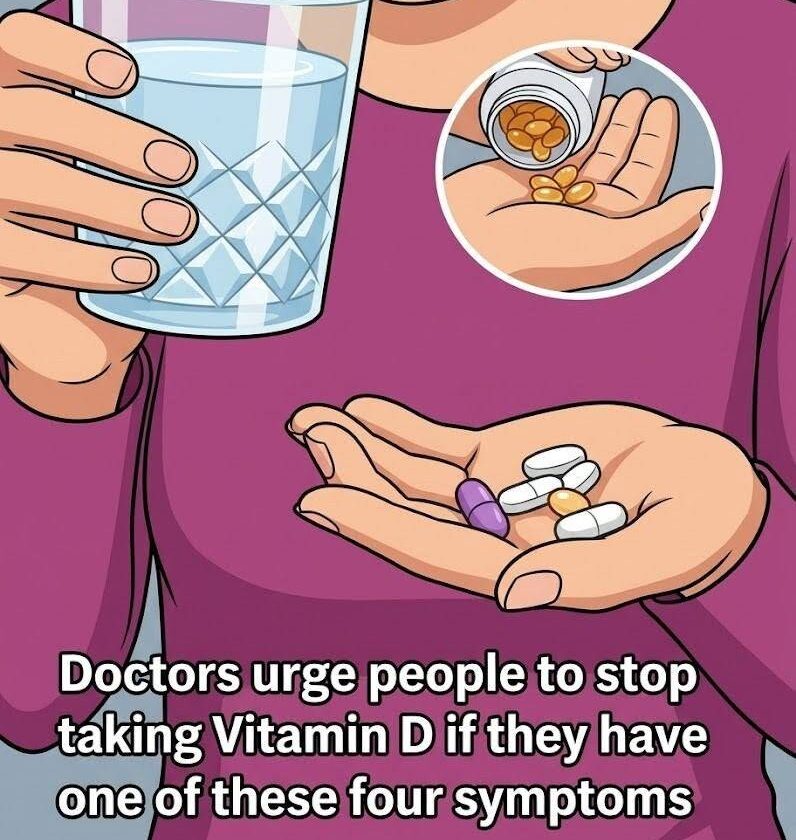
That headline is typical clickbait. Doctors do not generally tell people to “stop vitamin D immediately” based on vague symptoms. What they do warn about is vitamin D toxicity, which usually happens from very high doses over time, not normal supplement use.
Vitamin D toxicity (what actually matters)
Vitamin D is essential for bone health and immunity, but too much can raise calcium levels in the blood (hypercalcemia), which causes symptoms.
Real symptoms doctors watch for (the “4” commonly cited ones)
If vitamin D is excessive, these symptoms may appear:
1. Nausea or vomiting
High calcium can irritate the stomach and digestive system.
2. Extreme thirst and frequent urination
The kidneys try to flush out excess calcium, leading to dehydration.
3. Weakness and fatigue
Elevated calcium interferes with muscle and nerve function.
4. Confusion or brain fog
Severe cases can affect the nervous system and mental clarity.
Important reality check
- Toxicity is rare and usually comes from megadoses (e.g., 10,000–50,000 IU daily for weeks/months)
- Normal supplements (like 600–2,000 IU/day) are generally safe for most people
- Sun exposure does not cause vitamin D overdose
When to actually worry
You should not panic, but you should talk to a doctor if:
- You are taking high-dose vitamin D long-term
- You also take calcium supplements
- You have kidney disease
- You have persistent symptoms like those above
A simple blood test can check:
- Vitamin D levels
- Blood calcium
- Kidney function
Bottom line
Don’t stop vitamin D suddenly based on headlines. Toxicity is real but uncommon, and symptoms overlap with many other conditions.
If you want, I can explain safe daily vitamin D doses by age or how to tell deficiency vs overdose symptoms.