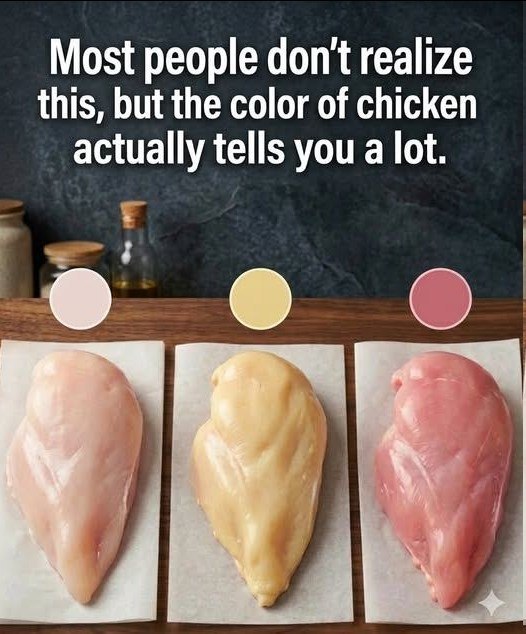
That line is usually leading into a myth: that chicken color tells you its quality, freshness, or safety.
In reality, it doesn’t.
🍗 Why chicken color varies
Chicken meat can look different for completely normal reasons:
- Diet: Chickens fed more corn or carotenoid-rich feed may have slightly more yellow fat/skin
- Breed: Different breeds naturally vary in skin tone
- Processing & storage: Exposure to air or packaging can make meat look paler or dull
- Lighting in stores: Supermarket lighting often changes how color appears
❌ What color does NOT tell you
- Freshness (expired chicken can still look normal)
- Safety (harmful bacteria aren’t visible)
- Nutritional quality in any meaningful way
✅ What actually matters more
Instead of color, check:
- Smell: sour or unpleasant odor = not safe
- Texture: slimy or sticky surface = bad sign
- Storage temperature: must stay properly chilled
- Expiry date
- Proper cooking temperature: this is what actually ensures safety
🧠 Bottom line
Chicken color is mostly about biology + feed + handling, not quality grading. Relying on color alone is misleading.
If you want, I can show you a quick “market checklist” for choosing fresh chicken that actually works in real life.