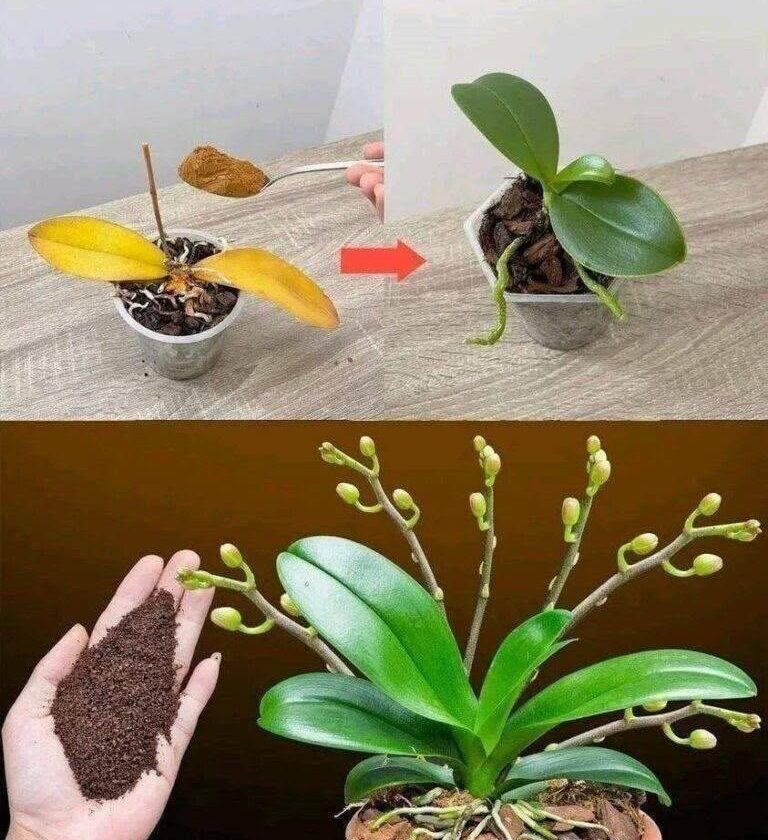
The claim that “just a teaspoon of a household ingredient will make an orchid suddenly bloom with lots of flowers” is a popular gardening myth. Orchids do not usually bloom because of a single miracle additive. Flowering depends mainly on the plant’s light, temperature changes, watering routine, roots, nutrients, and overall health.
To encourage more orchid blooms:
- Provide bright, indirect light: Many orchids, such as Phalaenopsis orchid, bloom best near a bright window without harsh direct sun.
- Avoid overwatering: Let the potting mix become slightly dry between waterings; soggy roots are a common cause of decline.
- Use a balanced orchid fertilizer: A fertilizer designed for orchids, applied according to its instructions, can support healthy growth and flowering.
- Give a temperature difference: Many orchids respond to slightly cooler nights for several weeks by producing flower spikes.
- Keep roots healthy: Good airflow and a proper orchid potting mix (often bark-based) help prevent root problems.
Be cautious with “secret” remedies like sugar water, milk, coffee, or kitchen scraps. They may not provide the nutrients orchids need and can encourage mold or root issues.
If you share the orchid type and what it looks like now (leaves, roots, whether it has flower spikes), I can suggest a more targeted way to encourage blooming.