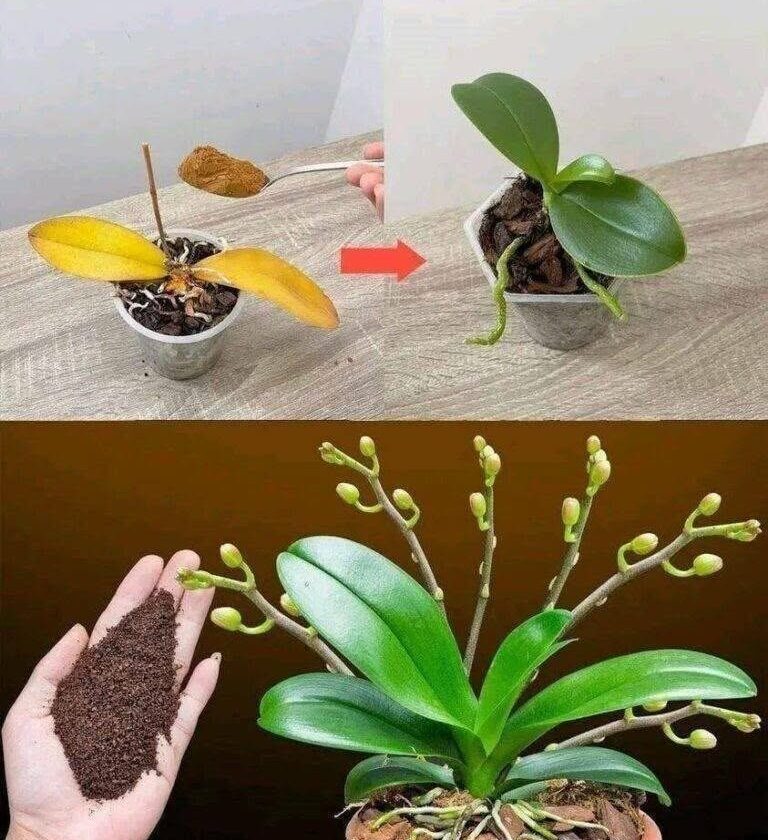
If you’re referring to a gardening tip claiming that “just a teaspoon makes an orchid suddenly bloom with lots of flowers,” be cautious: there is no magic ingredient that can instantly force an orchid to bloom. Orchid flowering depends mainly on the plant’s species, age, light, temperature changes, watering, and overall health.
Some helpful orchid care practices:
- Light: Give bright, indirect light (too little light often prevents blooming).
- Watering: Water when the potting mix is nearly dry; avoid letting roots sit in water.
- Feeding: Use a balanced orchid fertilizer (often diluted, such as ¼–½ strength) during active growth.
- Temperature: Many orchids, especially Phalaenopsis orchid, benefit from slightly cooler nighttime temperatures to encourage flower spikes.
- Roots and potting mix: Healthy roots and fresh orchid bark/mix support better growth.
Be careful with viral “one teaspoon” remedies using things like sugar, vinegar, baking soda, or kitchen waste—these can sometimes harm orchid roots or encourage mold.
If you tell me what ingredient the claim mentions (for example, cinnamon, rice water, honey, fertilizer, etc.) and what type of orchid you have, I can explain whether it’s useful or risky.