That statement is broadly reasonable, but it’s also a bit simplified and sometimes used in social media to frame a more complicated issue.
Amlodipine is one of the most commonly prescribed blood pressure medicines worldwide, and many patients do indeed receive it with minimal explanation—especially in busy clinics. Better understanding can improve adherence, but it’s not the only factor.
🫀 What amlodipine actually does (simple explanation)
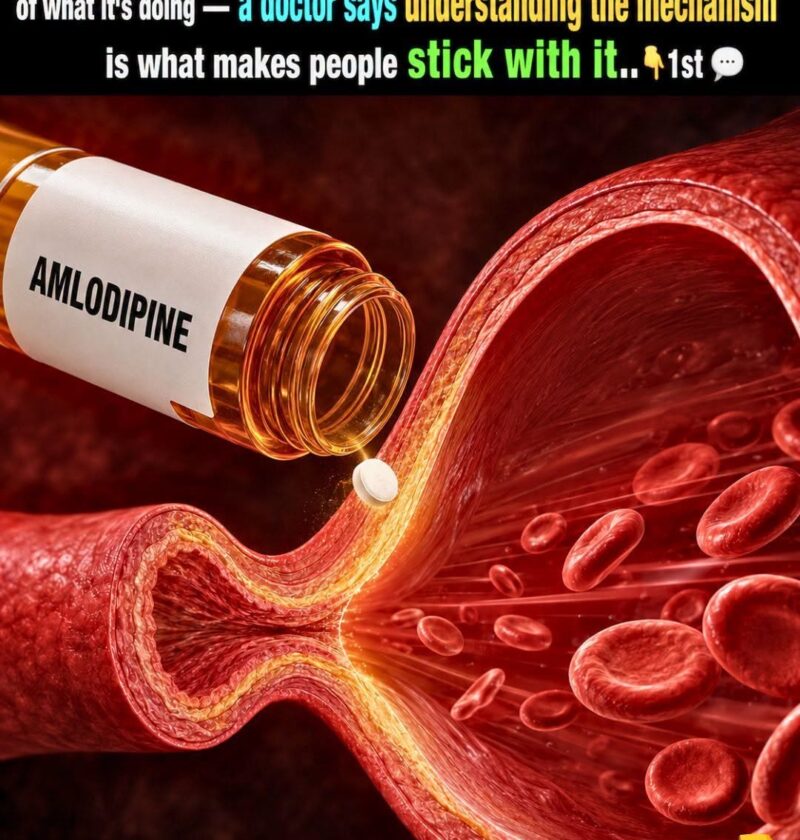
Amlodipine belongs to a class called calcium channel blockers. It works by:
- Relaxing the smooth muscle in blood vessel walls
- Widening arteries (vasodilation)
- Lowering resistance to blood flow
- This reduces blood pressure and makes the heart’s workload easier
So in plain terms:
👉 It helps blood flow more easily through relaxed blood vessels
💊 Why people are prescribed it
Doctors use amlodipine for:
- High blood pressure (hypertension)
- Chest pain due to reduced blood flow (angina)
- Sometimes long-term heart protection in high-risk patients
High blood pressure often has no symptoms, which is why it’s called a “silent” condition.
🧠 Why understanding it helps adherence
People are more likely to take medication consistently when they understand:
- It’s preventing future problems (stroke, heart attack, kidney damage)
- It’s not just for “feeling better today”
- Stopping it can quietly increase long-term risk
So the doctor’s point is valid: understanding improves motivation.
⚠️ But it’s not the whole story
Even with good explanation, adherence can be affected by:
- Side effects (like ankle swelling, flushing, headache)
- Cost or access to medication
- Forgetting doses
- Beliefs about long-term medication
- Lack of follow-up support
So education helps, but it’s not the only factor.
✔️ Bottom line
The claim is mostly true in principle: understanding how Amlodipine works can improve adherence and reduce anxiety. But long-term medication use also depends on side effects, support, and access—not just knowledge.
If you want, I can explain amlodipine side effects in a simple “what’s normal vs what’s not” guide so it’s easier to recognize when to worry.