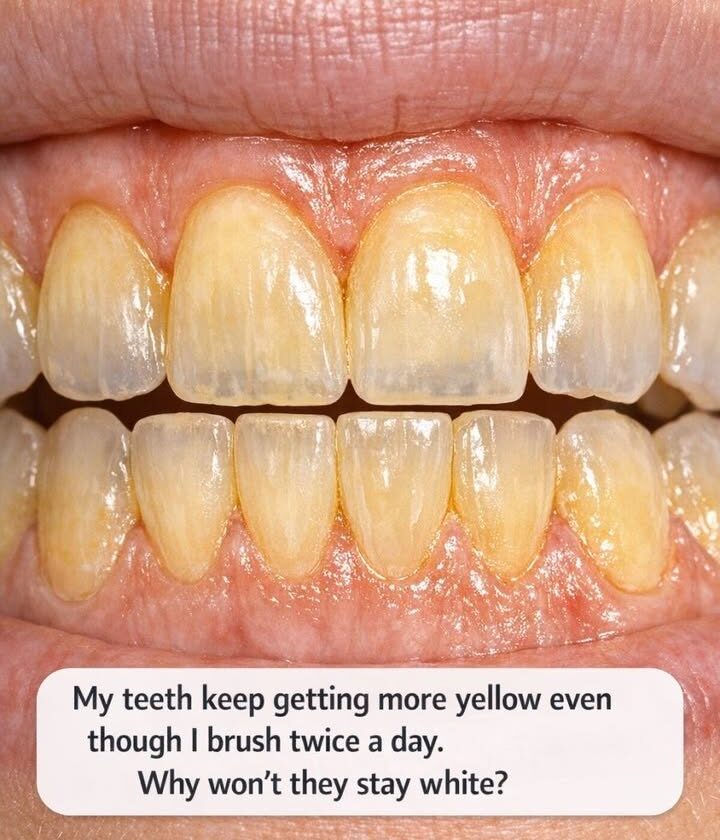
Brushing twice a day is important, but it doesn’t guarantee naturally white teeth. Teeth can become more yellow over time for several reasons that brushing alone cannot fully prevent.
Common causes include:
- Natural aging
- The outer enamel layer slowly becomes thinner with age, allowing more of the naturally yellow-colored dentin underneath to show through.
- Staining foods and drinks
- Coffee, tea, red wine, cola, berries, curry, and tobacco can gradually stain enamel.
- Frequent exposure matters more than occasional use.
- Plaque and tartar buildup
- Even with regular brushing, hardened tartar (calculus) can form and usually requires professional cleaning to remove.
- Brushing technique
- Brushing too gently may not remove plaque effectively, while brushing too aggressively can wear enamel and make teeth look more yellow.
- A soft-bristled toothbrush and proper technique are usually recommended.
- Toothpaste limitations
- Regular toothpaste mainly removes surface stains and protects against cavities; it does not change the natural color of teeth.
- Whitening toothpastes may help with mild surface stains but cannot dramatically change tooth color.
- Dry mouth or medications
- Reduced saliva flow and some medications can increase plaque buildup or affect tooth appearance.
What can help:
- Floss or use interdental cleaners daily.
- Consider a professional dental cleaning if you have tartar buildup.
- Rinse with water after staining drinks.
- Avoid smoking or tobacco products.
- Ask a dentist about safe whitening options if you want a lighter shade.
If your teeth have become suddenly more yellow, have new sensitivity, or you notice dark spots, chips, or changes in texture, it’s worth having them checked.
A couple of questions can help narrow it down:
- How old are you?
- Is the yellow color on the surface (stains) or do the teeth look yellow through the enamel?
- Do you drink coffee/tea or use tobacco?