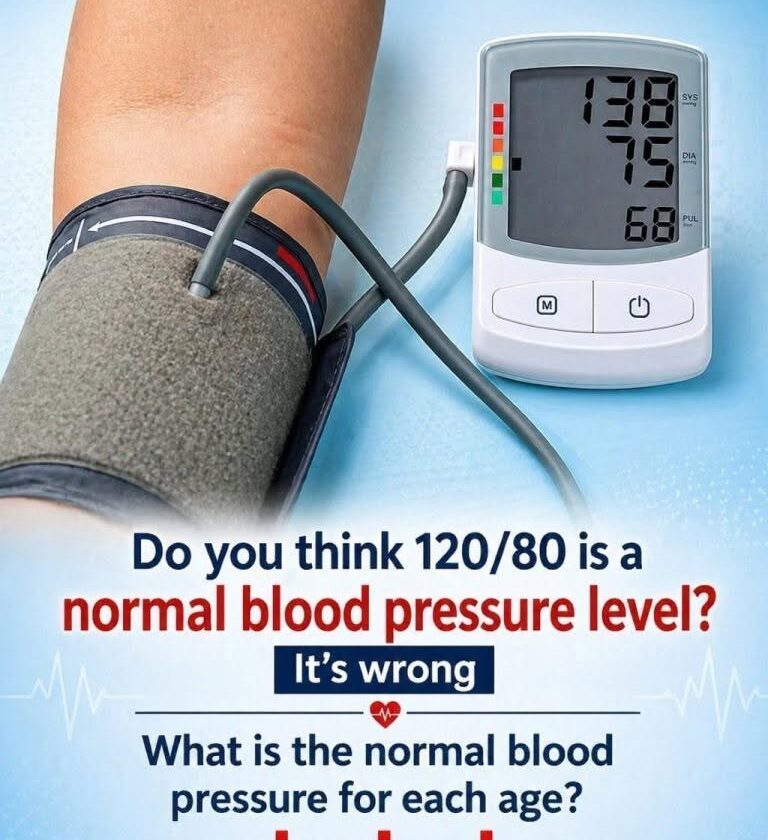
What Is Normal Blood Pressure for Your Age? A Clear Guide to Healthy Ranges
Blood pressure does not have a completely different “normal” range for each age group. While blood pressure often rises as people get older, medical guidelines generally focus on keeping adults’ blood pressure in a healthy range rather than accepting high numbers as a normal part of aging.
Blood pressure is written as two numbers:
- Systolic pressure (top number): pressure when the heart pumps.
- Diastolic pressure (bottom number): pressure when the heart relaxes.
General adult blood pressure ranges
| Blood pressure reading | What it generally means |
|---|---|
| Below 120/80 mmHg | Normal range for most adults |
| 120–129 / below 80 | Elevated |
| 130–139 or 80–89 | High blood pressure (Stage 1) |
| 140 or higher or 90 or higher | High blood pressure (Stage 2) |
| 180/120 or higher | Very high — may require urgent medical attention, especially with symptoms |
How age can affect blood pressure
- Adults in their 40s and 50s: Blood pressure may gradually increase due to changes in blood vessels, weight, stress, and lifestyle factors.
- Adults 60 and older: Higher readings are more common, but high blood pressure still increases the risk of heart disease, stroke, kidney disease, and other problems.
- Adults over 80: Treatment goals may be individualized based on overall health, frailty, medications, and risk of falls.
A single reading is not always enough
Blood pressure can temporarily rise because of:
- Stress or anxiety
- Exercise
- Caffeine or nicotine
- Pain
- A full bladder
- Incorrect measuring technique