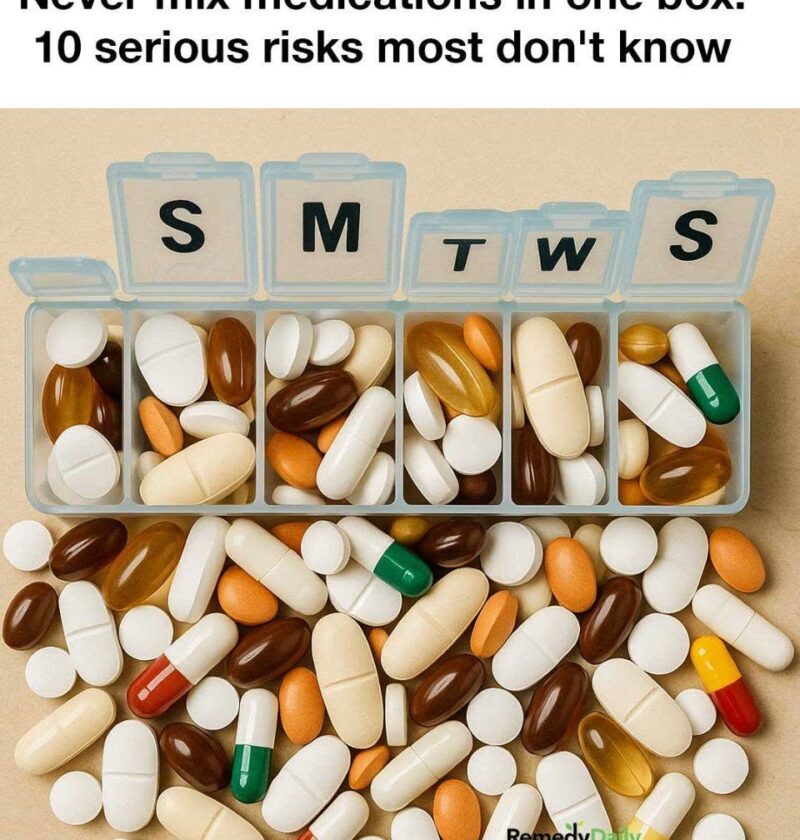
Here are 10 legitimate risks people are usually referring to, explained in a grounded way:
1. Taking the wrong medicine by mistake
When pills look similar, it’s easy to grab the wrong one—especially at night or in a hurry.
2. Double-dosing
You might accidentally take two doses of the same drug because you forgot you already took it.
3. Dangerous drug interactions
Some medicines shouldn’t be taken together (for example, certain painkillers with blood thinners). Mixing without clear labels increases that risk.
4. Wrong timing
Some meds must be taken:
- before food
- after food
- at night only
Mixing them can lead to incorrect timing.
5. Reduced effectiveness
Certain drugs lose effectiveness if taken incorrectly or together in the same routine without spacing.
6. Increased side effects
Even if medications are safe individually, incorrect combinations or timing can increase dizziness, stomach upset, or drowsiness.
7. Confusion in emergencies
If someone else (family member or caregiver) gives medicine, unlabeled mixing can lead to serious mistakes.
8. Overlooking expired medication
When everything is mixed, it’s harder to track expiry dates.
9. Harder to identify problems
If you have a reaction, it’s difficult to know which medication caused it.
10. Risk for children or elderly
These groups are especially vulnerable to dosing mistakes due to memory issues or visual confusion.
Important clarification
This doesn’t mean you must keep every medicine in separate pharmacy bottles forever.
A safe alternative is:
- Use a labeled weekly pill organizer
- Keep original packaging for reference
- Store a medication list (name + dose + timing)
Bottom line
The real issue isn’t “mixing in one box” itself—it’s lack of clear identification and tracking.
If you want, tell me what situation you saw this in (travel, daily routin