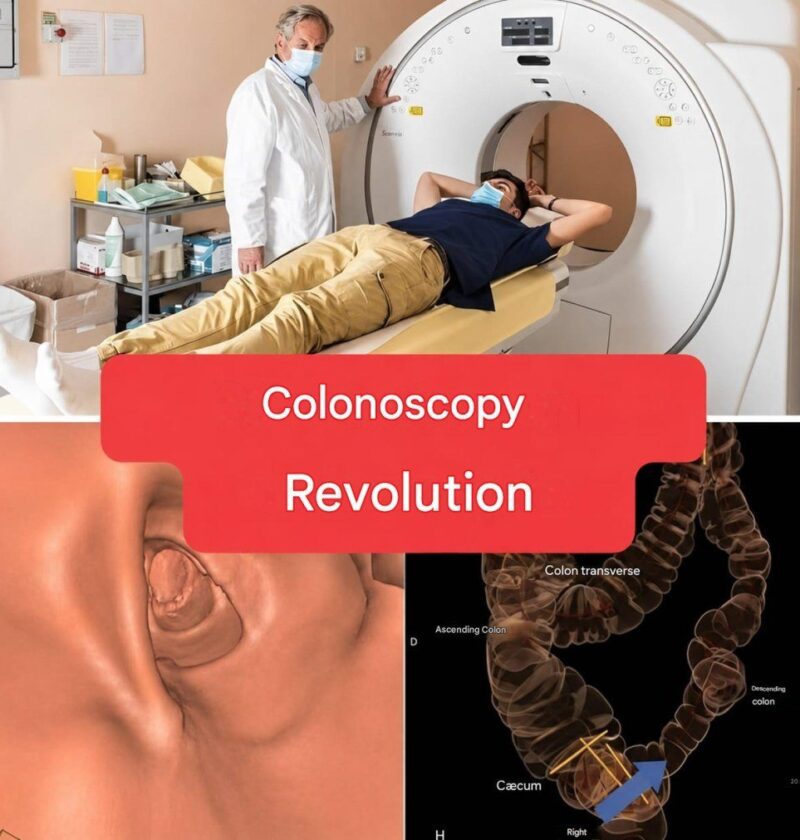
BREAKTHROUGH IN COLON CANCER SCREENING: MODERN COLONOSCOPY IS NOW SAFER, FASTER & MORE COMFORTABLE
(Part 1: In-Depth Guide to Modern Colon Examination Techniques – 1500+ Word Style Article)
🧠 Understanding Colonoscopy in Today’s Medical World
A colonoscopy is a diagnostic procedure used to examine the large intestine (colon) and rectum. It helps doctors detect:
- Colon cancer
- Polyps (small growths that may turn cancerous)
- Inflammation or bleeding
- Digestive disorders
Despite fears, modern colonoscopy has significantly evolved. It is now far safer, more accurate, and much more comfortable than in the past.
However, it is important to clarify:
👉 It is still a minimally invasive medical procedure, not a fully non-invasive test.
⚙️ How Modern Colonoscopy Has Improved Patient Comfort
😌 1. Advanced Sedation Techniques for Pain-Free Experience
Today, most patients receive light to deep sedation, meaning:
- They feel relaxed or sleep during the procedure
- No pain is typically felt
- Anxiety is significantly reduced
This has made colonoscopy much more tolerable compared to older methods.
💨 2. Carbon Dioxide (CO₂) Insufflation Instead of Air
Earlier procedures used normal air, causing bloating and discomfort.
Now many clinics use CO₂, which:
- Is absorbed faster by the body
- Reduces post-procedure gas pain
- Speeds up recovery
📷 3. High-Definition & AI-Assisted Imaging
Modern systems now include:
- Ultra-high-definition cameras
- Enhanced lesion detection
- Artificial intelligence support in some advanced hospitals
This improves accuracy and reduces the need for repeat procedures.
🧪 4. Ultra-Thin, Flexible Endoscopes
New-generation scopes are:
- Smaller in diameter
- More flexible
- Easier to navigate through the colon
This reduces discomfort and risk of complications.
🚶♂️ 5. Faster Recovery and Outpatient Procedure
Most modern colonoscopies:
- Take 20–40 minutes
- Allow same-day discharge
- Require minimal recovery time
Patients usually return to normal activities within hours.
🧬 6. Alternative Screening Methods (Less Invasive Options)
While colonoscopy remains the gold standard, some alternatives exist:
🧴 Stool DNA Tests
- Detect abnormal DNA from cancer or polyps
- Done at home
- No physical procedure required
🩸 FIT Test (Fecal Immunochemical Test)
- Detects hidden blood in stool
- Simple and non-invasive
📦 Capsule Endoscopy
- Swallowable camera capsule
- Takes images of the digestive tract
- Less invasive but not a full replacement for colonoscopy
⚠️ Important Medical Truth
Even with modern upgrades:
- Colonoscopy is still the most accurate method for detecting early colon cancer
- Alternatives are useful for screening but may miss certain issues
- A biopsy (tissue sampling) can only be done during colonoscopy
🧑⚕️ Who Should Get Screened?
Doctors generally recommend screening for:
- Adults over 45–50 years
- People with family history of colon cancer
- Individuals with chronic digestive symptoms
- Patients with unexplained weight loss or bleeding
Early detection dramatically improves survival rates.
📊 Key Benefits of Modern Colonoscopy
- Highly accurate diagnosis
- Prevention of colon cancer through polyp removal
- Safer and more comfortable than before
- Quick outpatient procedure
- Minimal downtime
🧾 PART 2: Simple Overview (Quick Summary Guide)
✔ What’s New in Colonoscopy Today?
- Strong sedation → almost no discomfort
- CO₂ gas instead of air → less bloating
- HD + AI imaging → better accuracy
- Thin flexible scopes → easier procedure
- Faster recovery → same-day discharge
🚫 Common Myths vs Reality
- ❌ “Colonoscopy is extremely painful” → Modern sedation makes it comfortable
- ❌ “It is outdated” → It is still the most accurate screening tool
- ❌ “It is fully invasive and risky” → It is minimally invasive and very safe
🩺 Final Takeaway
Colonoscopy has not become non-invasive—but it has become:
👉 safer
👉 more precise
👉 far more comfortable than before