The idea that “colonoscopy will no longer be an invasive examination” refers to newer and less invasive approaches being developed or already used for colorectal cancer screening. However, traditional colonoscopy has not been completely replaced.
Newer alternatives to traditional colonoscopy
1. Stool-based tests
These look for signs of cancer or precancerous changes in a stool sample.
Examples include:
- FIT (fecal immunochemical test): Detects hidden blood in stool.
- Stool DNA tests: Look for DNA changes linked to colorectal cancer along with blood markers.
Advantages:
- Done at home
- No sedation
- No bowel scope procedure
Limitations:
- If a result is abnormal, a colonoscopy is usually still needed.
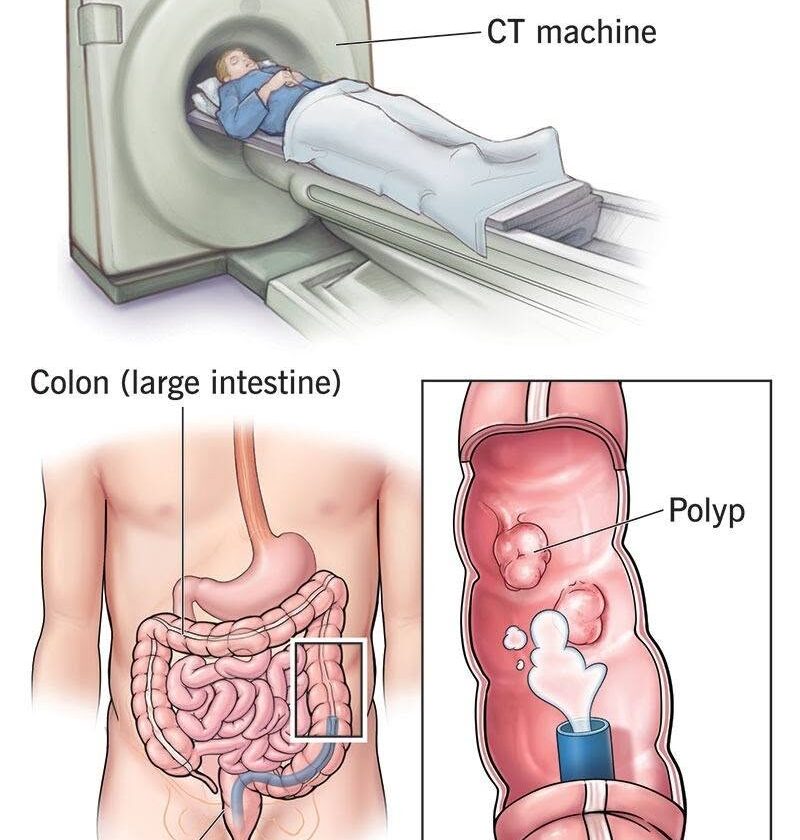
2. CT colonography (“virtual colonoscopy”)
This uses a CT scan to create images of the colon.
Advantages:
- No insertion of a camera through the entire colon
- Usually no sedation
Limitations:
- Still requires bowel preparation
- If polyps are found, a regular colonoscopy may be needed for removal.
3. Capsule endoscopy
A person swallows a small capsule containing a camera that passes through the digestive tract.
Advantages:
- Less invasive
- No traditional scope insertion
Limitations:
- Availability varies
- It may not allow doctors to remove polyps or take biopsies.
Why colonoscopy is still important
A colonoscopy remains the most complete screening test because it allows doctors to:
- See the entire colon
- Find polyps
- Remove precancerous polyps during the same procedure
- Take tissue samples if needed
The future of colorectal screening is likely to involve more accurate non-invasive tests, but for now, the best choice depends on a person’s age, risk factors, symptoms, and medical history.
If you are asking about a specific “new method” you saw advertised (for example, a capsule, blood test, or AI scan), share the details and I can explain how it compares with colonoscopy.