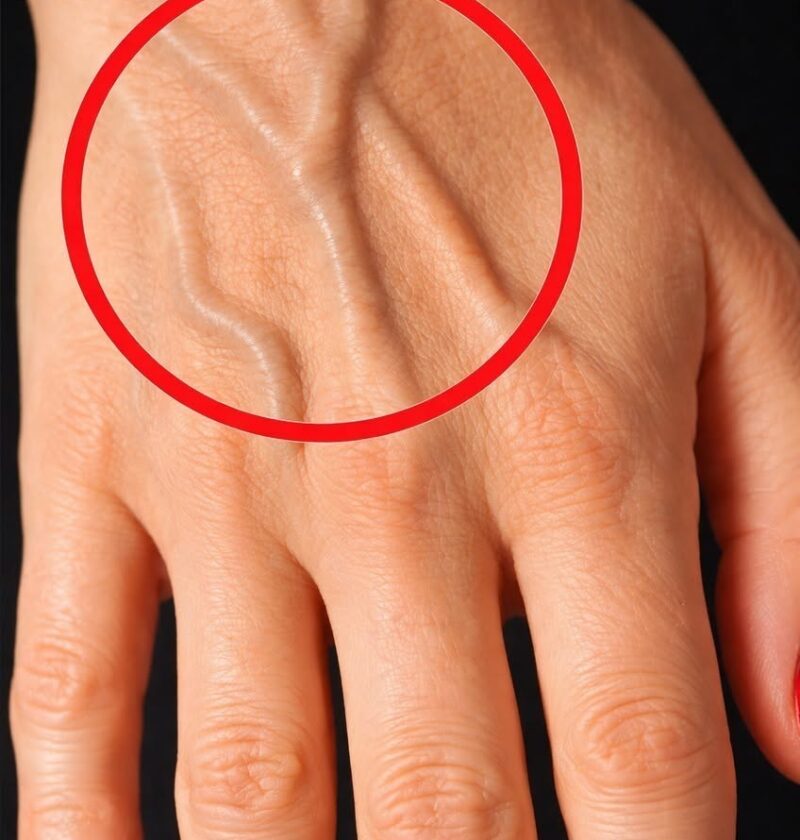
The claim “If your veins are visible, it means you are…” is a common clickbait headline. In reality, visible veins are often completely normal and usually don’t indicate a specific health condition by themselves.
Here are some common reasons veins are more noticeable:
1. Low body fat
People with less fat under the skin often have more visible veins, especially on the hands, arms, and legs.
2. Aging
As you get older, the skin becomes thinner and loses some of its elasticity, making veins easier to see.
3. Exercise
After exercise, veins may temporarily become more prominent because muscles need increased blood flow.
4. Genetics
Some people naturally have lighter, thinner skin or veins that are closer to the surface.
5. Warm weather
Heat causes blood vessels to widen, which can make veins appear larger and more visible.
When visible veins may need medical attention
See a healthcare professional if visible veins are accompanied by:
- Pain or tenderness
- Swelling
- Redness or warmth
- A hard, rope-like vein
- Skin changes or ulcers near the vein
- Sudden swelling of one arm or leg
These symptoms could indicate a condition such as varicose veins, inflammation of a vein, or a blood clot, which require medical evaluation.
The bottom line
Visible veins alone usually do not mean anything is wrong. They are often a normal result of your skin, body composition, age, temperature, or activity level. If they appear suddenly or are associated with pain, swelling, or other concerning symptoms, it’s a good idea to have them checked.