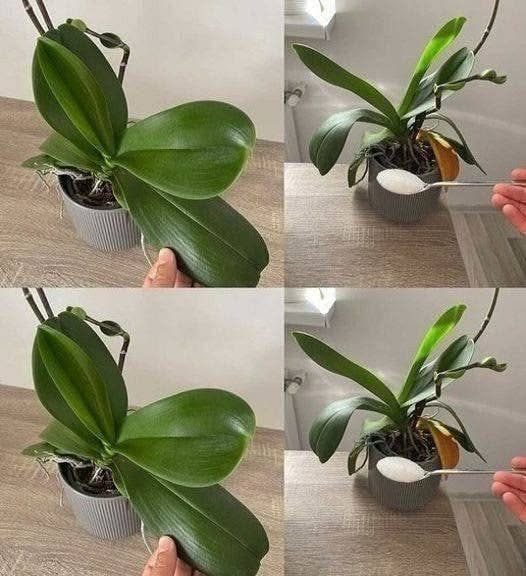
That claim is another viral oversimplification.
Do orchids bloom continuously with “1 tablespoon of fertilizer”?
No. Orchids don’t bloom continuously just because of a single fertilizer dose. Blooming depends on a combination of plant health, light, temperature cycles, and correct feeding over time.
In fact, over-fertilizing orchids is one of the most common reasons they stop blooming or get damaged roots.
How orchid blooming actually works
Orchids (like Phalaenopsis) usually bloom when:
- They get bright, indirect light
- There is a temperature drop at night
- They are healthy and not stressed
- They receive balanced, diluted fertilizer regularly—not a one-time “boost”
Proper fertilizing method (what actually works)
Instead of “1 tablespoon miracle feed,” orchid growers use:
- Weak fertilizer solution (¼ strength)
- Applied every 1–2 weeks during active growth
- “Flush with water” once a month to remove salt buildup
A common guideline is:
“Weakly, weekly” (but even that depends on conditions)
What happens if you overdo it
Too much fertilizer can cause:
- Burned roots
- Yellow or wrinkled leaves
- No flowers at all
- Salt buildup in the potting medium
What really encourages continuous blooming
- Consistent light (most important factor)
- Proper watering (not overwatering)
- Slight temperature variation between day and night
- Repotting every 1–2 years
- Healthy root system
Bottom line
There is no “one tablespoon makes orchids bloom forever” trick. Orchids are slow, structured bloomers—not