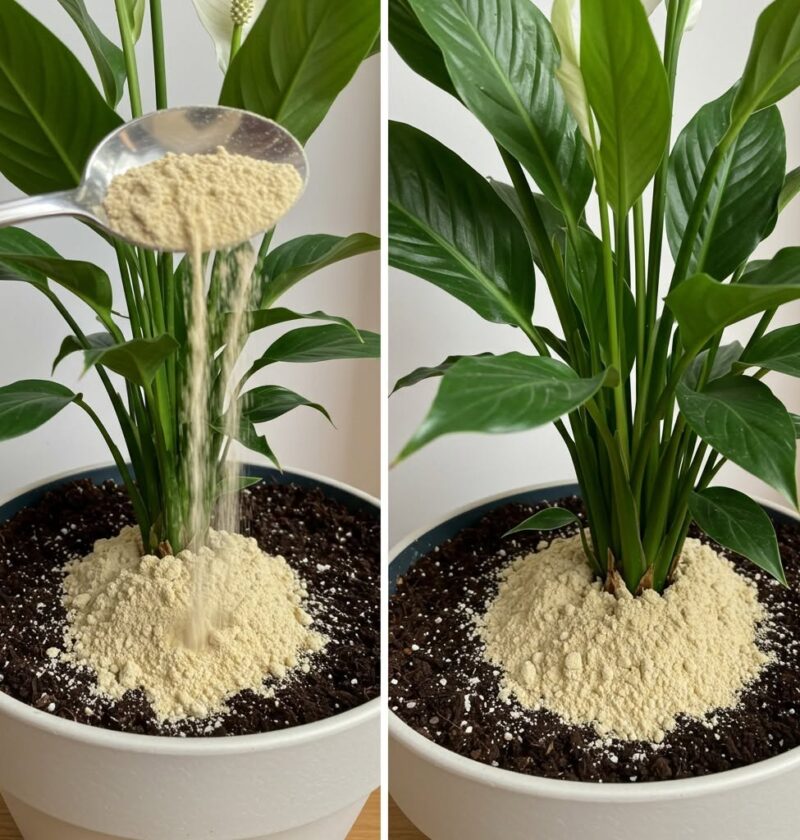
The peace lily is a popular indoor plant known for its glossy green leaves and white “flower” spikes.
🌿 Peace Lily (Spathiphyllum)
Despite the name, the white part isn’t a true flower—it’s a modified leaf called a spathe, which surrounds the actual tiny flowers on the spadix.
🌱 Why people love it
- Grows well indoors with low light
- Helps improve indoor air quality (limited but beneficial effect)
- Blooms beautiful white spathes
- Easy to care for compared to many flowering plants
💧 Care guide (simple)
- Light: Low to medium indirect light (avoid harsh sun)
- Water: When top soil feels dry; it droops when thirsty (a helpful signal)
- Soil: Well-draining potting mix
- Humidity: Likes moderate to high humidity
- Fertilizer: Light feeding every 4–6 weeks in growing season
⚠️ Common issues
- Yellow leaves → usually overwatering
- Brown tips → low humidity or chemicals in tap water
- No flowers → not enough light or nutrients
- Drooping → often just needs water (but can also mean overwatering)
☠️ Safety note
Peace lily is toxic if eaten by pets or humans, so keep it away from cats and dogs.
🧠 Bottom line
Peace lilies are low-maintenance, elegant indoor plants that thrive in low light—but they still need proper watering balance to stay healthy and bloom.
If you want, I can tell you:
- How to make a peace lily bloom more