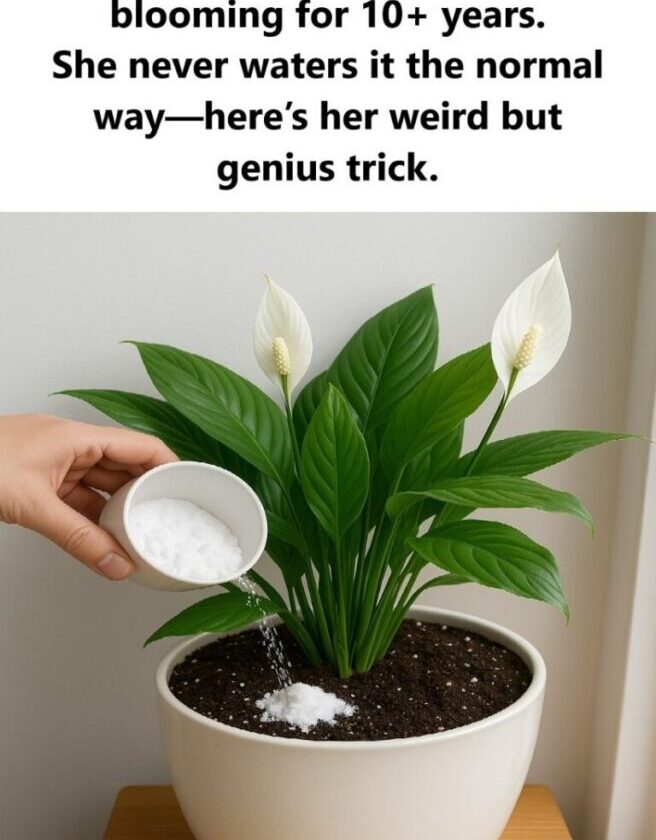
The idea of a “Peace Lily care secret: forget water” is catchy—but it’s misleading. A Peace Lily (Spathiphyllum) actually does need regular moisture. If you stop watering it, it won’t stay beautiful for long—it will droop quickly as a stress signal.
What people usually mean by that viral advice is: don’t rely on a rigid schedule. Instead, use a smarter method that keeps the plant consistently happy.
The real “secret” is this: water based on soil condition, not the calendar. Peace lilies thrive when the top inch of soil is slightly dry but the root zone stays lightly moist. Let it dry out too much and you’ll see drooping leaves; keep it constantly soggy and the roots can rot.
A better approach than “just water it” is using one of these:
Bottom watering (the real upgrade)
Place the pot in a tray of water for 10–20 minutes, then let it drain. This encourages even root hydration and avoids dry pockets in the soil.
Use better water quality
If your tap water is heavily chlorinated or salty, it can cause brown leaf tips. Filtered, rainwater, or dechlorinated water often keeps the leaves looking cleaner and healthier.
Check moisture, not timing
Stick your finger in the soil or use a simple moisture meter. Water when it feels slightly dry in the top layer—not bone dry, not wet.
Humidity matters as much as water
Peace lilies are tropical plants. They respond really well to higher humidity—grouping plants together, occasional misting, or placing a tray of pebbles with water underneath helps keep leaves lush.
So the “secret” isn’t skipping water—it’s watering more intelligently and consistently, instead of guessing or overdoing it.
If you want, I can give you a simple weekly care routine that keeps a peace lily flowering longer and avoiding droop cycles.