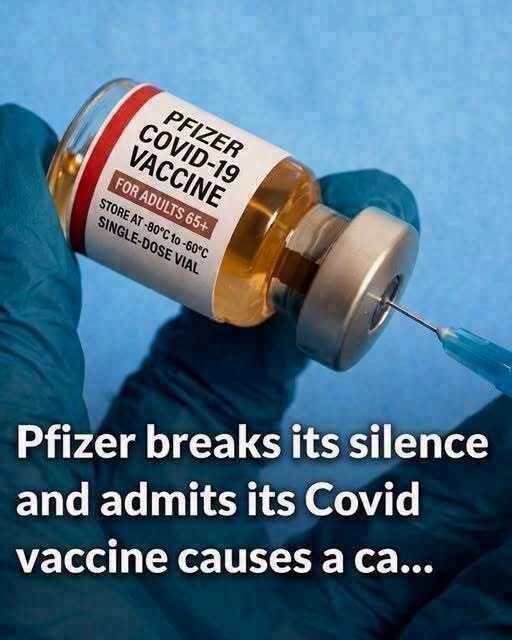
That headline is incomplete and misleading (“cause a ca…” is usually clickbait shorthand). It’s commonly used online to suggest something alarming that isn’t supported in the way it’s phrased.
Here’s the reality:
🧪 What Pfizer actually acknowledged
Pfizer and regulators have stated that their COVID-19 vaccine, like all medical products, can have side effects, some rare and serious.
This is not a “secret admission”—it’s part of standard vaccine safety monitoring and public reporting.
💉 Known rare adverse effects (real but uncommon)
The most documented include:
- Myocarditis/pericarditis (inflammation of the heart muscle or lining)
- Mostly in young males
- Usually mild and recoverable with treatment
- Allergic reactions (anaphylaxis)
- Very rare, typically occurs shortly after vaccination
Related medical term: Myocarditis
🚨 What the claim usually tries to imply
Clickbait posts often cut off or distort statements to suggest:
- Hidden widespread harm
- New shocking admissions
- Causes of major diseases without evidence
These claims are not supported by regulatory data or peer-reviewed consensus.
📊 What large-scale data actually shows
Global health agencies and studies consistently found:
- Vaccines significantly reduce risk of severe COVID-19
- Serious side effects are rare compared to infection risks
- Benefits outweigh risks for most populations
🧭 Bottom line
Yes—like all vaccines and medicines, COVID-19 vaccines can have side effects, including rare serious ones.
But headlines suggesting a sudden “admission of hidden danger” are typically misleading or incomplete.
If you want, I can break down what the real documented risks vs benefits are in simple numbers, so it’s easier to compare.