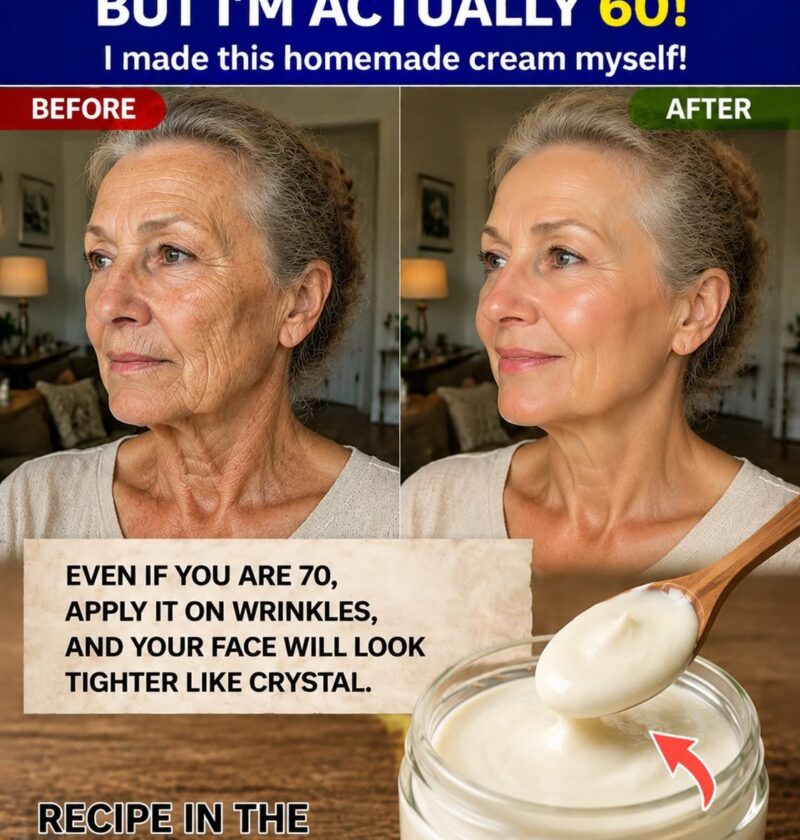
That claim is mostly social media exaggeration, not a medically supported skincare treatment.
Baking soda is alkaline and mildly abrasive, so while it can be used in cleaning and very occasional DIY scrubs, it is not suitable as a nightly “cream” for skin care, especially for wrinkles or blemishes.
Why this “baking soda cream for wrinkles” is misleading
Your skin has a slightly acidic protective barrier (the “acid mantle”). Baking soda is strongly alkaline, which means:
- It can disrupt skin pH
- It may damage the natural barrier that protects against bacteria and dryness
- It can cause irritation rather than repair
So instead of reducing wrinkles, repeated use can actually make skin:
- Dry
- Sensitive
- Red or inflamed
- More prone to breakouts
What it might do (short-term effects)
Some people notice:
- Temporary smoothness (from mild exfoliation)
- Reduced oiliness
But these are surface effects, not real wrinkle reversal.
Risks of applying it overnight
Leaving it on skin for hours increases the chance of:
- Chemical irritation
- Burning sensation
- Flaking and peeling
- Worsening acne in sensitive skin
Dermatologists generally advise against overnight use.
What actually works better for wrinkles and blemishes
Evidence-based options include:
- Retinoids (vitamin A derivatives) – improve fine lines and acne
- Sunscreen daily – prevents 80%+ of premature aging
- Moisturizers with hyaluronic acid – improve skin hydration
- Niacinamide – helps with texture and pigmentation
- Gentle chemical exfoliants (AHA/BHA) – safer than baking soda
Bottom line
A baking soda “cream” is a DIY internet trend, not a skincare treatment. It may temporarily feel smooth but can damage your skin barrier with repeated use—especially overnight.
If you want, I can suggest a simple, low-cost nighttime skincare routine that actually helps with wrinkles and blemishes safely.