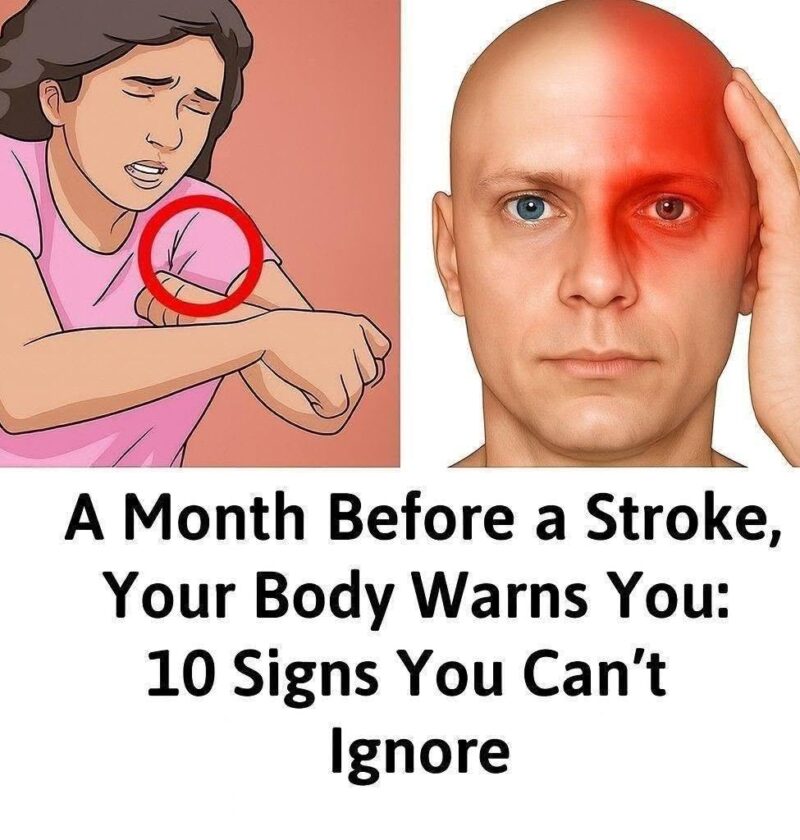
That type of headline is very misleading. It suggests a stroke always gives clear warnings a month in advance, which is not true for most people.
A stroke can sometimes have warning signs, but they are usually sudden and close to the event, not reliably “a month before.”
What is a stroke?
A stroke happens when blood flow to the brain is blocked or a blood vessel bursts. A key condition related to it is Stroke.
Real warning signs you should NEVER ignore (urgent)
These are signs of an active stroke or immediate emergency:
- Face drooping on one side
- Arm weakness or numbness
- Speech difficulty or confusion
- Sudden vision problems
- Severe sudden headache
- Loss of balance or coordination
This is summarized by the FAST rule (Face, Arms, Speech, Time).
Possible “early warning” events (but not always present)
Some people may experience a transient ischemic attack (TIA), often called a “mini-stroke”:
Transient Ischemic Attack
Symptoms are similar to stroke but:
- Last minutes to hours
- Fully resolve
- Still a major warning sign for future stroke risk
Risk factors that matter more than “10 hidden signs”
Instead of vague symptom lists, stroke risk is better predicted by:
- High blood pressure (most important)
- Diabetes
- Smoking
- High cholesterol
- Heart disease (like atrial fibrillation)
- Obesity
- Lack of physical activity
Why “10 signs a month before” is misleading
- Stroke usually happens suddenly
- Many symptoms in such lists are non-specific (fatigue, dizziness, headaches)
- They can come from many harmless conditions
When to take action
Seek emergency care immediately if stroke symptoms appear, even if they come and go.
If you want, I can also give you a simple checklist to reduce stroke risk or explain early symptoms in more realistic detail based on medical evidence.