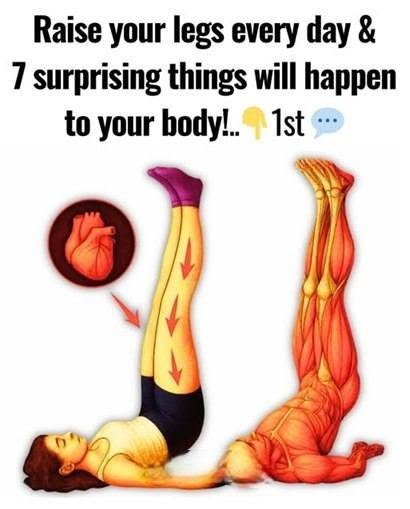
Raising your legs each day can have some benefits, but many viral claims are exaggerated. Here are 7 evidence-based effects that some people may experience:
- May reduce mild leg swelling
- Elevating your legs above the level of your heart can help fluid drain back toward the body, especially after long periods of sitting or standing.
- Can ease tired or aching legs
- People with mild venous (vein) problems may feel relief from heaviness or discomfort.
- Supports blood flow back to the heart
- Leg elevation can temporarily improve venous return, but it does not “clean” arteries or cure circulation problems.
- May reduce pressure in leg veins
- This can be helpful for some people with varicose veins or chronic venous insufficiency.
- May help you relax
- Spending a few minutes lying down with your legs elevated can feel calming and may reduce muscle fatigue.
- Can help recovery after prolonged standing
- It may lessen discomfort after work, travel, or exercise.
- May improve comfort if you have mild swelling during pregnancy
- Leg elevation can help temporarily, though it’s not a treatment for pregnancy-related medical conditions.
For most people, elevating the legs for 15–30 minutes once or a few times a day is sufficient. Ideally, the feet should be above the level of the heart.
Seek medical care promptly if you have sudden swelling in one leg, severe leg pain, redness, warmth, chest pain, or shortness of breath, as these can be signs of a serious condition such as a blood clot. Persistent swelling should also be evaluated by a healthcare professional.