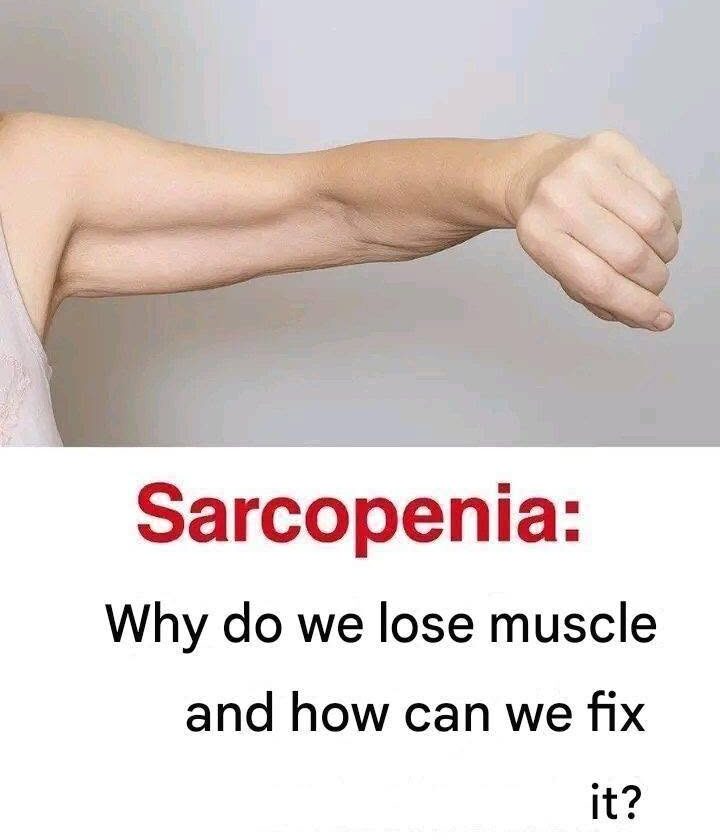
Sarcopenia is the gradual loss of muscle mass, strength, and function—most common with aging, but it can also happen earlier due to lifestyle or illness.
🧬 What is sarcopenia?
Sarcopenia is a condition where muscle fibers shrink and weaken over time, leading to reduced mobility, balance, and physical strength.
It usually starts slowly after age 30–40 and becomes more noticeable after 60.
⚠️ Main causes of muscle loss
1. Aging (natural hormone and muscle changes)
- Lower growth hormone and testosterone
- Reduced muscle protein synthesis
2. Physical inactivity
- Sedentary lifestyle is one of the strongest drivers
- “Use it or lose it” effect on muscle tissue
3. Poor protein intake
- Not enough dietary protein reduces muscle repair
- Common in older adults with low appetite
4. Chronic inflammation
- Long-term illness or obesity can accelerate muscle breakdown
5. Hormonal changes
- Lower estrogen/testosterone levels with age
6. Chronic diseases
- Diabetes, kidney disease, or cancer can contribute
7. Vitamin deficiencies
- Low vitamin D is linked with weaker muscle function
🏋️♂️ Proven ways to slow or reverse sarcopenia
1. Resistance training (most important)
- Weight lifting, resistance bands, bodyweight exercises
- 2–4 times per week can significantly improve strength
2. Higher protein intake
- Aim roughly 1.0–1.2 g protein/kg body weight (more if active or elderly)
- Sources: eggs, fish, chicken, lentils, dairy
3. Adequate vitamin D
- Sunlight exposure or supplements if deficient
4. Stay active daily
- Walking, climbing stairs, light movement throughout the day
5. Balanced calories
- Extreme dieting can worsen muscle loss
6. Treat underlying conditions
- Managing diabetes, thyroid issues, or chronic illness helps preserve muscle
🧠 Key takeaway
Sarcopenia is not just “normal aging” that must be accepted—it is strongly influenced by:
- Activity level
- Protein intake
- Overall health
And it is highly responsive to resistance training, even in older adults.
If you want, I can give you a simple weekly workout plan for rebuilding muscle at any age or a diet chart focused on preventing muscle loss.