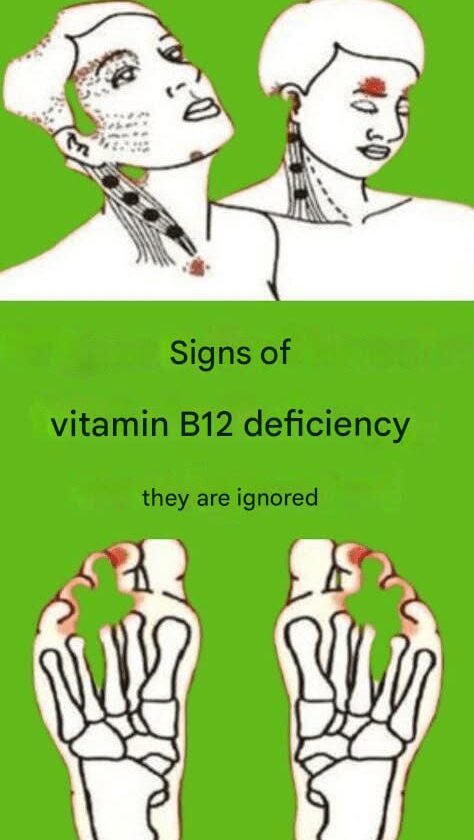
“Some symptoms of vitamin B12 deficiency are common but often not recognized early.”
It’s not saying there’s a single obvious sign that everyone ignores—it’s pointing to the fact that B12 deficiency can be subtle at first and mistaken for other problems.
Why vitamin B12 deficiency gets “ignored”
Symptoms often develop slowly and can look like stress, aging, or other common issues.
Common signs of vitamin B12 deficiency
1. Fatigue and weakness
- Feeling unusually tired even with normal rest
2. Nerve symptoms (very important)
- Tingling or numbness in hands and feet
- Burning or “pins and needles” sensations
- Balance problems
3. Cognitive changes
- Memory issues
- Brain fog
- Difficulty concentrating
4. Mood changes
- Irritability
- Low mood or symptoms similar to depression
5. Blood-related symptoms
- Pale skin
- Shortness of breath
- Dizziness (due to anemia)
6. Mouth and tongue changes
- Sore, smooth, or swollen tongue
- Mouth ulcers
Why it can be missed
- Symptoms overlap with stress, anemia, thyroid issues, or aging
- Early symptoms are mild and non-specific
- People may not get tested until symptoms become severe
Who is at higher risk
- People with low intake of animal products (vegetarians/vegans)
- Older adults (reduced absorption)
- People with stomach/intestinal conditions
- Long-term use of certain medications (like acid reducers)
Important reality check
B12 deficiency is treatable, but if left untreated for a long time, nerve damage can become partly irreversible. That’s why early testing matters.
Bottom line
The headline really means:
“Vitamin B12 deficiency has subtle early symptoms that are often mistaken for other conditions, so it can go undiagnosed.”
If you want, I can help you figure out whether someone’s symptoms sound like B12 deficiency or something else worth checking.