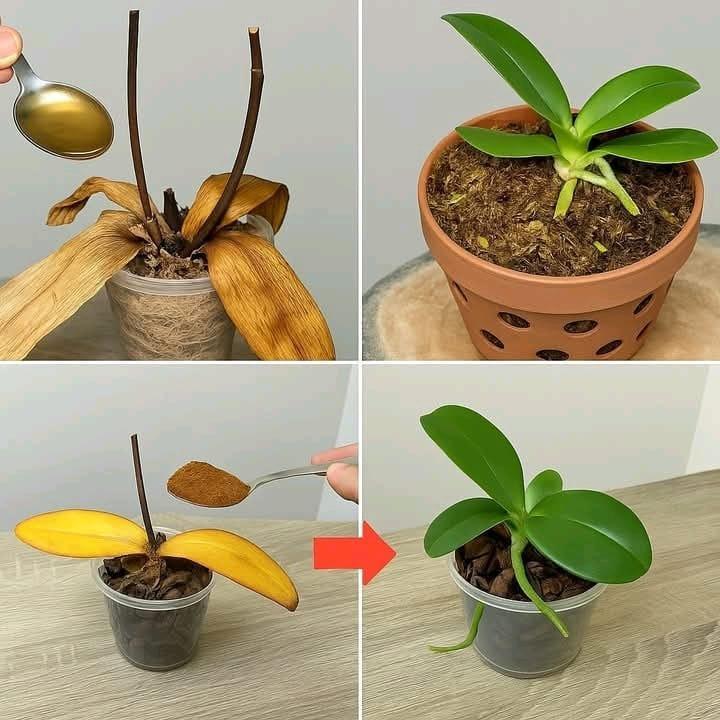
Orchid Revival Secrets – How to Support Weak Roots and Encourage Repeat Blooms Naturally
🌿 Why Orchids Suddenly Stop Blooming
Orchids are among the most elegant and popular houseplants, but they are also sensitive to changes in environment. Many people notice their orchids stop flowering or appear weak after a few months.
This usually happens due to:
- Overwatering or underwatering
- Root rot caused by poor drainage
- Lack of proper light exposure
- Nutrient imbalance in potting medium
- Stress after repotting
When orchid roots begin to dry out or rot, the plant struggles to absorb nutrients and water properly, which directly affects flowering ability.
There is no instant “magic ingredient” that revives dead roots, but there are proven orchid care techniques that can help stimulate recovery and encourage healthy regrowth over time.
🌱 The Truth Behind “Magic Spoon” Orchid Hacks
Social media often promotes quick-fix solutions like adding a spoon of powder, sugar, or kitchen ingredients to revive orchids instantly. In reality:
- Dead roots cannot be revived instantly
- Recovery requires new root growth
- Proper humidity, light, and airflow matter most
- Nutrition alone cannot fix root damage
However, orchids can recover slowly if the right environment is restored and proper care is provided.
🌸 What Healthy Orchid Recovery Actually Depends On
Instead of shortcuts, orchid revival depends on four key factors:
☀️ 1. Proper Light Exposure
Orchids need bright, indirect sunlight. Too much direct sun burns leaves, while too little light stops blooming.
💧 2. Controlled Watering
Overwatering is one of the most common reasons for root damage. Orchids prefer:
- Light watering
- Drying slightly between watering cycles
- Well-draining pots
🌬️ 3. Good Air Circulation
Roots need oxygen. Stagnant, wet soil encourages rot and fungal growth.
🌱 4. Balanced Nutrient Feeding
Orchids benefit from mild, diluted fertilizers designed for flowering plants. Overfeeding can harm sensitive roots.
🌿 Natural Orchid Care Boosters (Safe and Proven Practices)
Instead of “instant revival powders,” gardeners often use safe, gentle methods like:
- Cinnamon (used sparingly on cut roots to reduce fungal growth)
- Orchid-specific liquid fertilizers
- Proper orchid bark mix instead of regular soil
- Humidity trays for stable moisture levels
These do not “magically revive” plants, but they help create conditions where recovery is possible.
🌸 Can a Damaged Orchid Bloom Again?
Yes—but only if new healthy roots develop.
Once the plant stabilizes:
- New leaves may appear
- Stronger roots begin to grow
- Eventually, flowering may return
However, this process takes time—often weeks to months depending on plant condition.
🧠 Why “All-Year Blooming Orchids” Is Misleading
Even healthy orchids follow natural blooming cycles. They:
- Bloom seasonally
- Rest between flowering periods
- Require energy recovery phases
No natural plant blooms continuously all year without breaks.
🌼 Realistic Orchid Care Routine for Better Growth
A simple care routine includes:
- Water once a week (adjust based on climate)
- Place in bright, indirect light
- Use orchid bark mix
- Fertilize lightly once or twice a month
- Trim dead or rotten roots carefully