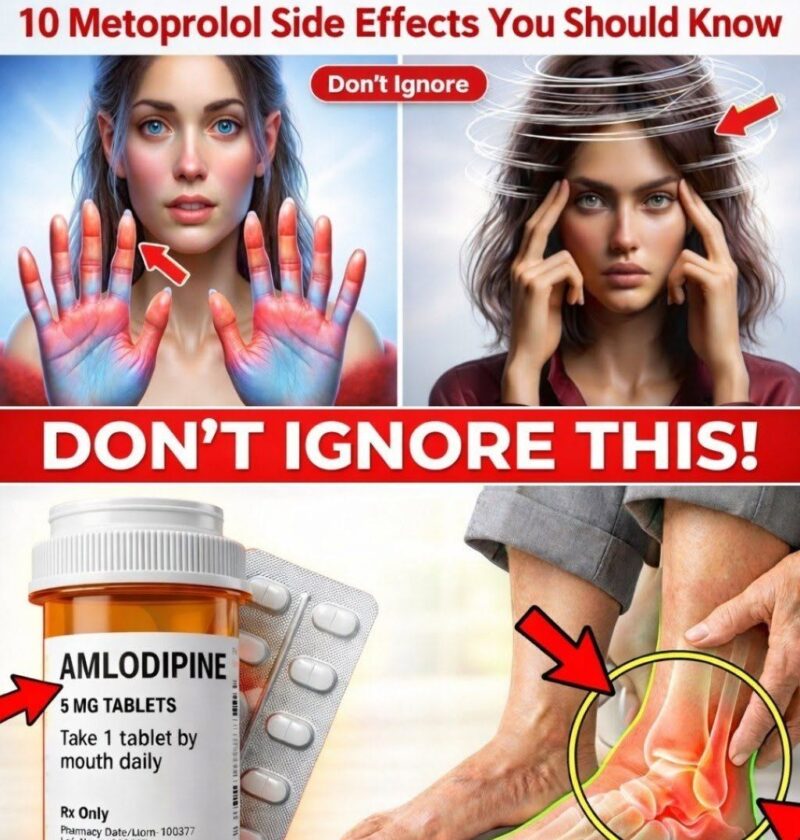
That headline—“The 10 Metoprolol Side Effects Your Doctor is PRAYING You Don’t Discover”—is typical fear-based clickbait. It exaggerates normal medication side effects to get attention.
Metoprolol is a commonly prescribed beta-blocker used for:
- High blood pressure
- Angina (chest pain)
- Heart rhythm problems
- Heart failure (in some cases)
Like all medications, it can cause side effects—but most are well-known, monitored, and managed in clinical practice.
Common side effects (more likely)
These are the ones doctors routinely warn about:
- Fatigue or tiredness
- Dizziness or lightheadedness
- Slow heart rate (bradycardia)
- Cold hands and feet
- Mild nausea or stomach upset
- Sleep disturbances or vivid dreams
Less common but important side effects
- Shortness of breath (especially in people with asthma or COPD)
- Depression or mood changes (uncommon but possible)
- Low blood pressure
- Weight gain (usually mild)
Rare but serious (need medical attention)
- Very slow heart rate causing fainting
- Worsening heart failure symptoms (swelling, severe breathlessness)
- Severe allergic reaction (rash, swelling, difficulty breathing)
- Chest pain worsening after sudden stopping of the drug
Important safety point
One of the biggest real risks is stopping metoprolol suddenly, which can lead to:
- Rapid heart rate
- Increased blood pressure
- Chest pain or even heart attack in high-risk patients
That’s why doctors always recommend tapering gradually under supervision.
Bottom line
Metoprolol is widely used and generally safe when prescribed correctly, and its benefits for heart and blood pressure conditions usually far outweigh the risks.
If you want, I can break down:
- Whether metoprolol causes weight gain or erectile dysfunction (common concerns), or
- How it compares to other beta-blockers.