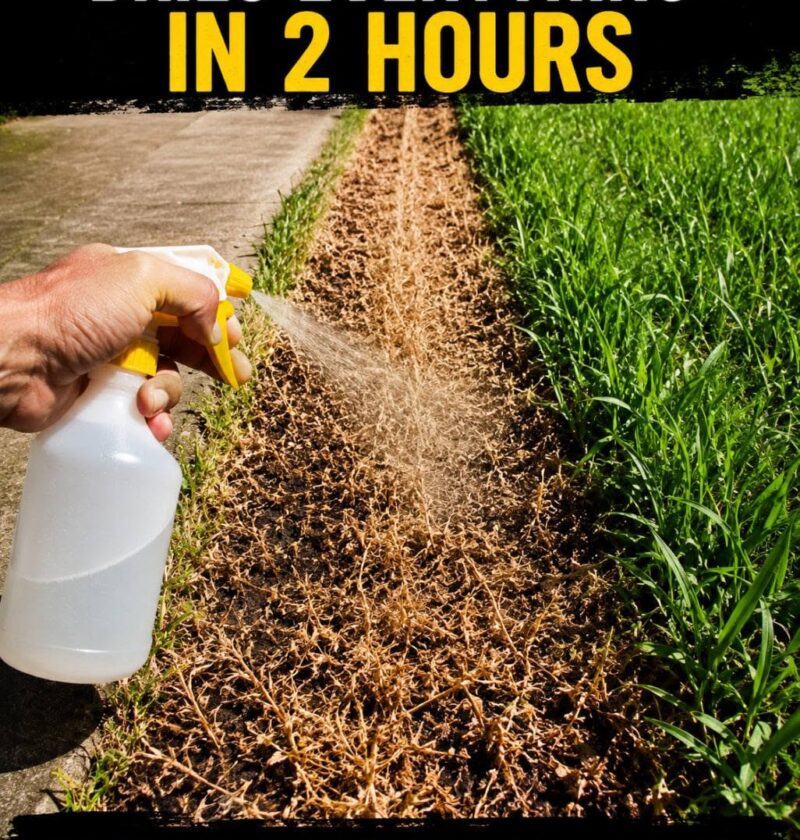
The claim “The best homemade weed killer: no poison (dries everything in 2 hours)” is a common gardening viral claim. Homemade weed killers can damage or kill some weeds, but there is no safe, universal recipe that dries all weeds completely in two hours.
A popular homemade mixture is often:
- Vinegar (acetic acid)
- Dish soap
- Sometimes salt
Here’s what you should know:
Vinegar-based sprays
- Household vinegar (around 5% acetic acid) may burn the leaves of small, young weeds.
- Stronger horticultural vinegar products work faster but are more hazardous to handle.
- Vinegar usually works as a contact killer—it damages the parts of the plant it touches but may not kill deep roots, so many perennial weeds can grow back.
Be careful with salt
Salt can kill plants, but it can also:
- Damage soil quality.
- Prevent future plants from growing.
- Harm nearby grass, flowers, trees, and beneficial soil organisms.
Safer weed-control options
- Pull weeds when the soil is moist and remove the roots.
- Apply mulch (wood chips, straw, or leaves) to block sunlight.
- Use boiling water carefully on weeds growing in cracks or paths.
- Improve lawn health so weeds have less room to spread.
If you use a homemade spray
- Avoid spraying on windy days.
- Keep it away from desirable plants.
- Avoid areas where pets or children may contact freshly treated surfaces.
- Test a small area first.
A “2-hour miracle weed killer” is usually an exaggeration—fast leaf browning does not always mean the weed is dead. The best method depends on whether the weeds are in a lawn, garden beds, driveway cracks, or around trees.