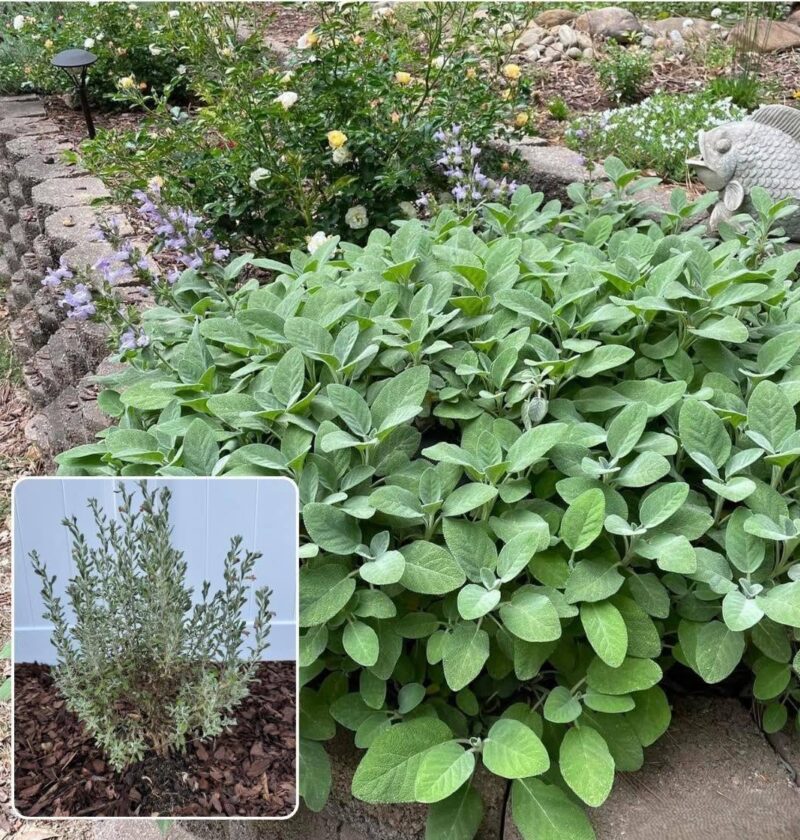
That headline is more lifestyle marketing than science—but there is real value behind it if we separate facts from hype.
A sage bush (Salvia officinalis) is a hardy Mediterranean herb that does well in sunny, dry conditions. It’s popular in gardens for cooking, fragrance, and pollinator support—but it’s not a “must-have” for every backyard.
🌿 Real benefits of growing sage
1. Culinary use
Fresh sage leaves are widely used to flavor:
- Meat dishes (especially poultry and lamb)
- Butter sauces and stuffing
- Roasted vegetables
2. Low-maintenance plant
- Thrives in full sun
- Tolerates drought well once established
- Doesn’t require rich soil
3. Attracts pollinators
When it flowers, sage can attract:
- Bees
- Butterflies
This helps overall garden biodiversity.
4. Aromatic and pest-resistant qualities
The strong scent may help:
- Deter some garden pests
- Improve smell in herb gardens
⚠️ What the “hidden reason” claims usually exaggerate
You may see claims like:
- “Cures diseases”
- “Purifies air dramatically”
- “Repels all insects”
These are overstated. Sage is useful, but it is not a medical treatment or a complete pest control solution.
🌞 Why “sun-drenched” matters
Sage actually does best with:
- 6+ hours of direct sunlight
- Well-drained soil
- Minimal overwatering
Without sun, it becomes weak and less flavorful.