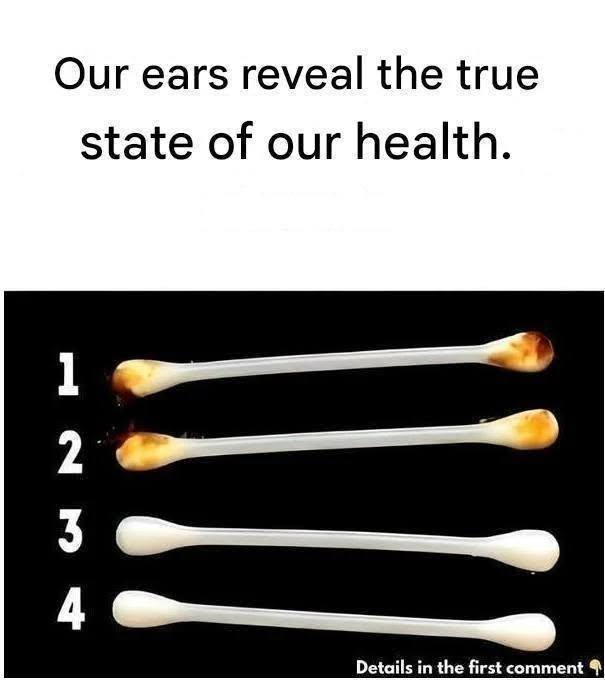
Yes, the body can sometimes provide clues about health problems, and the ears can occasionally reflect certain conditions. However, the ears are not a reliable window into every aspect of your health, despite what many viral posts suggest.
👂 What your ears may reveal
Hearing loss
Changes in hearing can be related to:
- Aging
- Noise exposure
- Ear infections
- Certain medications
- Less commonly, some circulatory or neurological conditions
Ringing in the ears (tinnitus)
Tinnitus can be associated with:
- Loud noise exposure
- Earwax buildup
- Hearing loss
- Stress and anxiety
- Some medications
Dizziness and balance problems
The inner ear contains structures that help control balance. Disorders affecting these structures can cause:
- Vertigo
- Unsteadiness
- Nausea
Examples include Meniere’s disease and other vestibular disorders.
Ear pain or discharge
These symptoms often point to local ear problems such as:
- Ear infections
- Irritation
- Eardrum injury
Claims to be skeptical of
Social media posts often claim that ear shape, earwax color, earlobe appearance, or random ear sensations can diagnose:
- Heart disease
- Liver disease
- Kidney disease
- Cancer
- Vitamin deficiencies
Most of these claims are unsupported or oversimplified.
One example that does have some scientific interest is the diagonal earlobe crease (“Frank’s sign”), which has been studied as a possible marker associated with cardiovascular disease. However, it is not a diagnostic test, and many people with the crease are perfectly healthy.
When to seek medical attention
Consider seeing a healthcare professional if you experience:
- Sudden hearing loss
- Persistent ringing in one ear
- Severe dizziness or vertigo
- Ear discharge, bleeding, or significant pain
- Rapidly worsening hearing problems
Bottom line