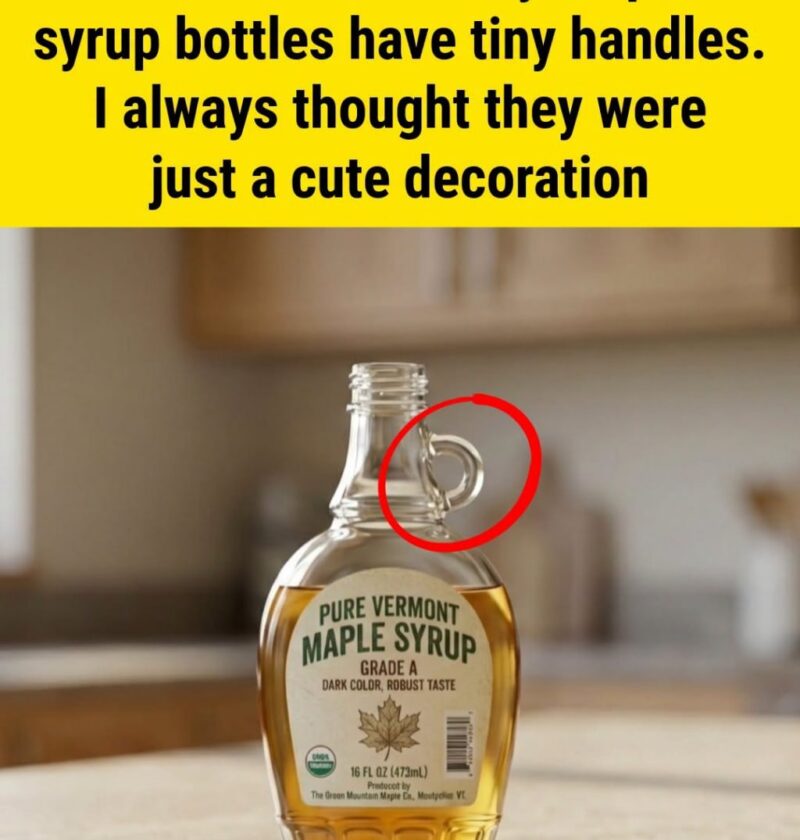
That little “handle” on maple syrup bottles looks decorative at first glance, but it actually comes from a mix of practicality, packaging history, and North American food culture—especially in Canada.
The design traces back to traditional glass syrup jugs used in places like Quebec, where maple syrup production became a major rural industry. Early producers needed containers that were easy to pour from, easy to grip when sticky, and sturdy enough for repeated use. Glass was common, but it’s slippery—especially when syrup drips down the side—so adding a small molded handle improved control and reduced spills.
That “tiny handle” is essentially a mini version of a pitcher handle. It’s not meant for your whole hand; it’s more of a finger hook that helps stabilize the bottle while pouring. This became especially useful when syrup started being sold in smaller retail glass bottles rather than large farm containers.
There’s also a branding and nostalgia angle. Maple syrup became closely tied to Canadian identity, and packaging followed suit. The familiar jug shape with a handle helped signal “authentic maple syrup” versus imitation syrups or corn syrup products. Over time, even modern plastic containers kept the same visual cue just to preserve that traditional look.
So the handle survives today for three reasons at once: better grip and pouring control, historical continuity from farm packaging, and strong cultural branding tied to Canadian maple syrup production.