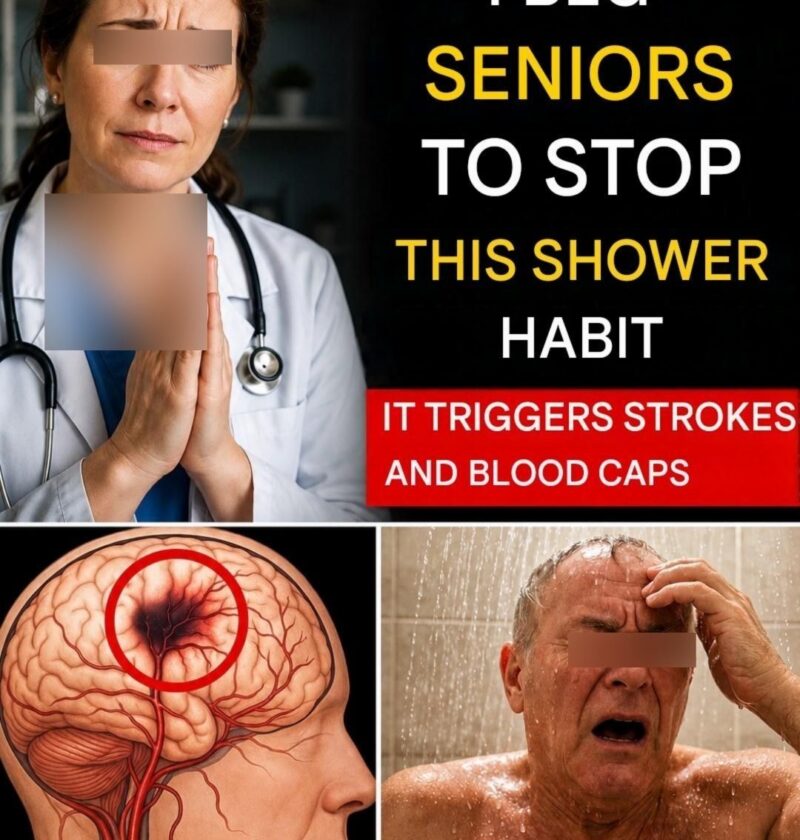
That headline is almost certainly clickbait or an exaggerated interpretation of real medical facts.
There is no credible medical evidence that a normal shower habit by itself “increases stroke risk overnight.” What is true is more nuanced:
What doctors actually know
Stroke risk is influenced by things like:
- High blood pressure (the biggest factor)
- Diabetes, high cholesterol
- Smoking
- Heart rhythm problems (like atrial fibrillation)
- Dehydration
- Poorly controlled cardiovascular disease
A shower doesn’t directly cause stroke—but certain extreme conditions during bathing could theoretically stress the cardiovascular system, especially in vulnerable people.
Where the confusion usually comes from
Some situations can temporarily affect blood pressure:
- Very hot showers → may lower blood pressure suddenly, causing dizziness or fainting
- Very cold showers → may briefly raise blood pressure and heart rate
- Sudden temperature changes → can stress the heart in people with existing heart disease
- Night-time dehydration + hot bath/shower → may slightly thicken blood temporarily in high-risk individuals
In rare cases, someone with already fragile blood vessels or uncontrolled hypertension might experience an event around the same time—but the shower is not the true cause.
Why “overnight stroke from showering” is misleading
Strokes don’t usually happen because of a single routine like bathing. They develop from long-term vascular disease, and often occur:
- During sleep or early morning (natural blood pressure changes)
- When blood pressure is uncontrolled
- After years of risk factors building up
So if a story says “this shower habit causes stroke overnight,” it’s almost always oversimplified or misreported science.
Practical, sensible advice for seniors
If the goal is stroke prevention, these are actually meaningful:
- Keep blood pressure well controlled
- Avoid very hot showers if you feel dizzy or have heart disease
- Stand up slowly after bathing
- Stay hydrated
- Manage diabetes and cholesterol
- Don’t ignore warning signs like sudden weakness, facial droop, or speech trouble
If you want, paste the full article or video claim—I can break down exactly what part is misleading or what study they’re (possibly incorrectly) referencing.